
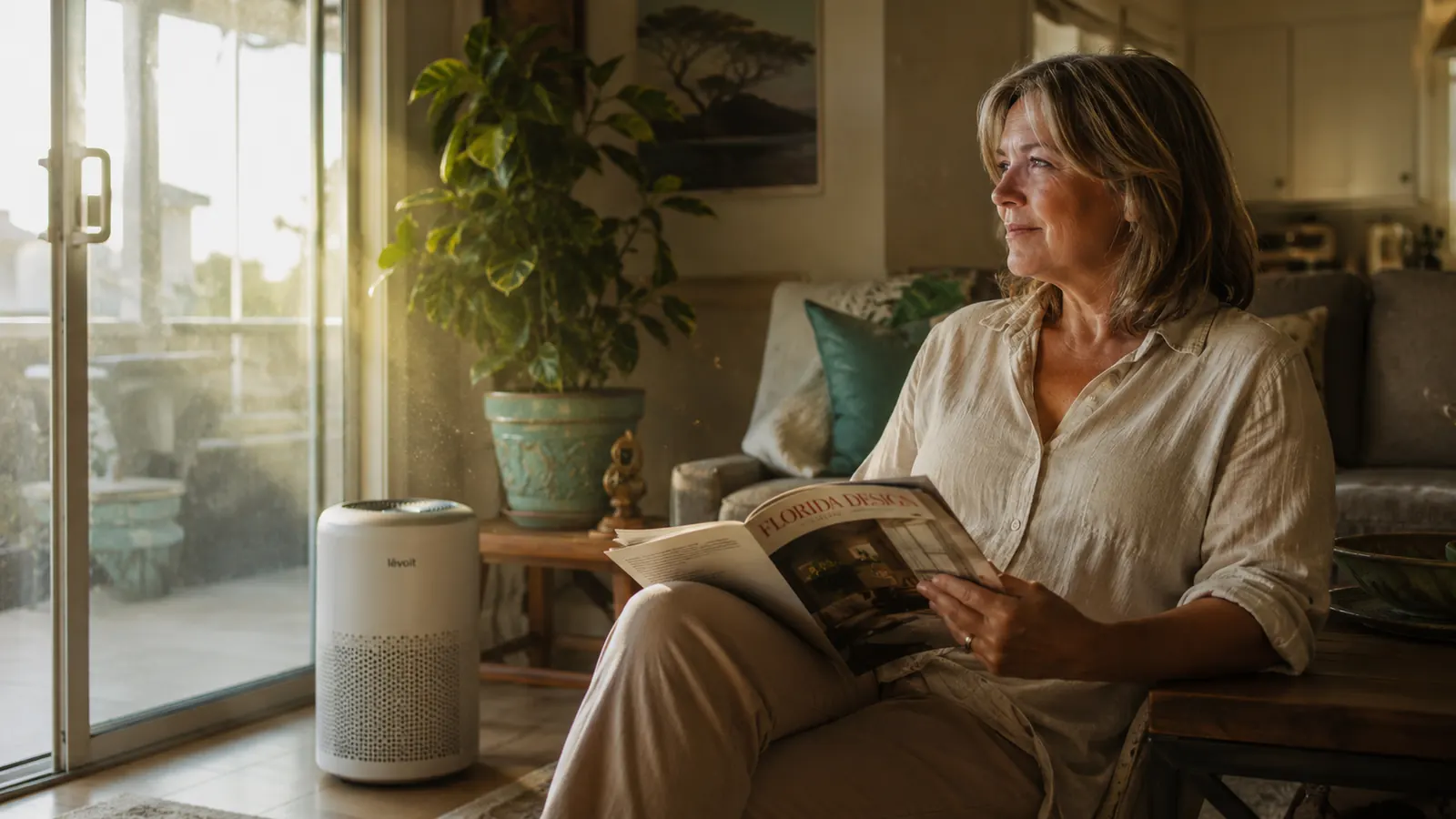
My husband started sneezing every March like clockwork, right around when the oak pollen turns our patio furniture yellow-green and dusts the pool skimmer basket by ten in the morning. We live on the Gulf side of Florida, which means the windows stay shut against the humidity nine months of the year anyway, so whatever gets tracked in on shoes or drifts through a cracked door stays put, circulating through the same living room air for days at a time. I spent two allergy seasons wiping blinds and running the ceiling fans harder, which mostly just stirred the dust around instead of getting rid of any of it. What actually changed things was running an air purifier the right way, specifically the Levoit Vital 200S I keep in the corner of our living room now, sized to the room and run on the right settings instead of plugged into a bedroom outlet and forgotten.
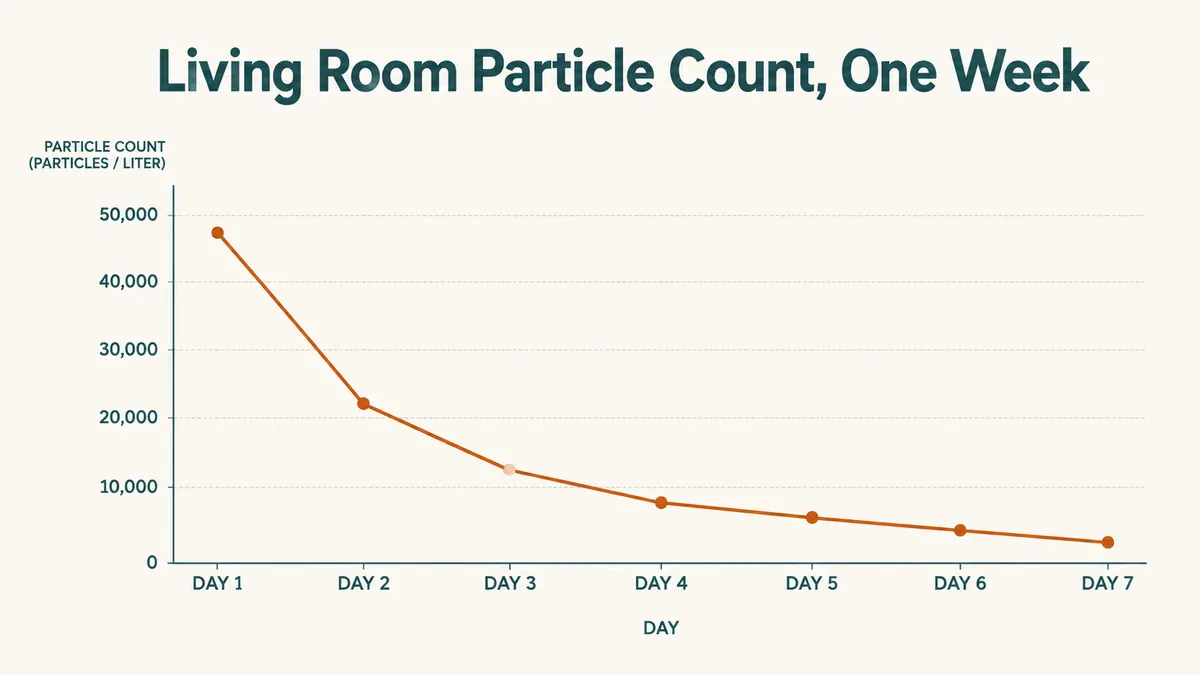
This is not a promise that a machine will fix anyone's allergies. What I can tell you, because I have measured it with a cheap particle counter and because our house genuinely feels less dusty by the end of a week, is that you can measurably cut down the dust, pollen, and pet dander floating in a room's air if you size the unit correctly, place it well, run it on the right mode, keep the room reasonably sealed, and stay on top of the filter. That is the whole method. None of it is complicated, but almost everyone I know skips at least two of these five steps, which is why their purifier ends up as an expensive white noise machine sitting in the corner of a nursery.
Before You Buy Anything Else for Dust and Pollen, Get the Sizing Right
The fastest fix for a dusty, pollen-heavy room isn't a bigger purifier, it's the right purifier run correctly for that specific space. Here's the one running in our living room and how its coverage rating actually works.
Amazon Check Today's Price on Amazon →Step 1: Size the purifier to the room you actually spend time in
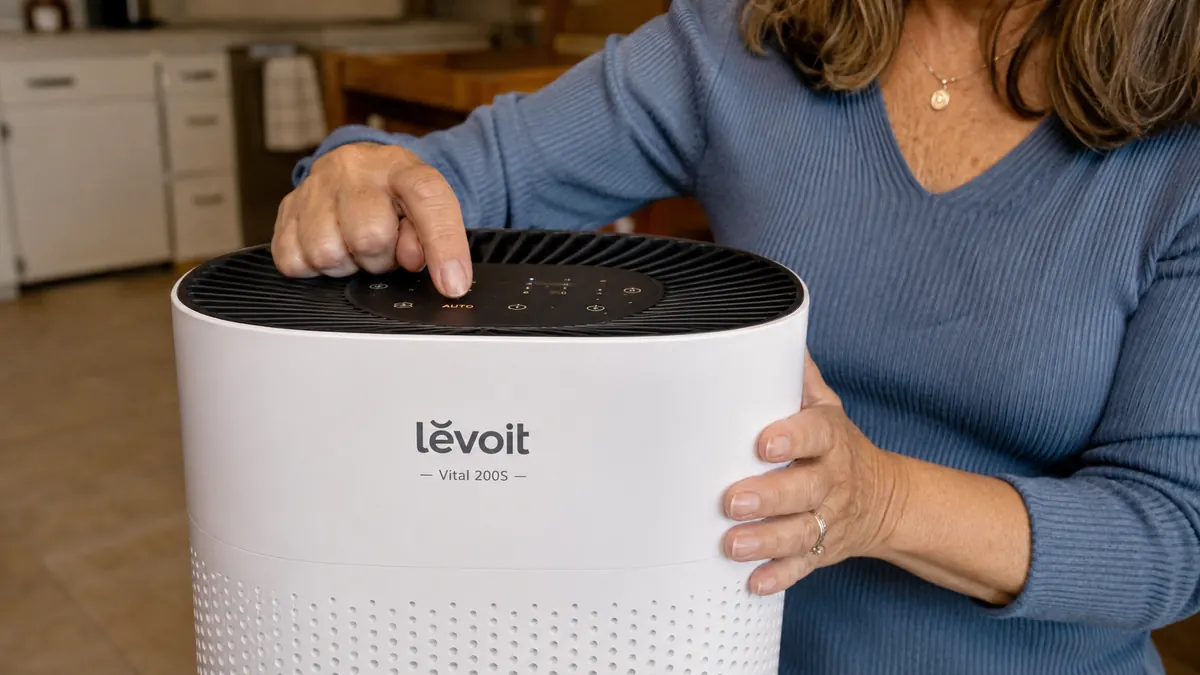
The single biggest mistake I see is buying a purifier sized for a bedroom and expecting it to handle an open-concept living and kitchen area, or buying a huge unit and running it in a home office that's barely 120 square feet. The Levoit Vital 200S I run is rated for spaces up to 1,875 square feet at one air change per hour, which sounds like overkill for our living room until you realize that rating assumes you want the whole room's air cycled once every 60 minutes. For actual dust and pollen work, you want closer to four or five air changes an hour in the room where you sit or sleep most, which means matching the unit's real coverage number, not the biggest number printed on the box, to roughly a quarter or a fifth of its rated square footage.
In our house that means the Vital 200S lives in the living room, which runs about 340 square feet including the open kitchen pass-through, not in the guest bedroom down the hall where it would be way oversized and mostly just hum along on the lowest speed doing very little. If you have a small bedroom, a smaller unit run on a higher speed will outperform a huge purifier set to whisper-quiet in the same space. Measure the room in feet, multiply length by width, and pick a purifier whose rated coverage is at least four times that number if you want it to run quietly most of the day and still keep up.
It also matters what's inside the unit doing the filtering, not just the fan speed on the label. A true HEPA filter, the kind rated to capture at least 99.97 percent of particles at the 0.3 micron size, is worth checking for specifically, since some units marketed as 'HEPA-type' or 'HEPA-style' use a lighter mesh that lets more through. The Vital 200S ships with a true HEPA filter paired with a fan strong enough to actually push air through that dense a mesh, which is the combination that matters. A great filter behind a weak fan just means less air gets cleaned per hour, no matter what the filter itself is capable of catching.
Step 2: Give it open floor space, not a corner behind the recliner
Where you put a purifier matters almost as much as which one you buy. Airflow needs to move in and out freely on all sides, so pushing it into a corner, behind a couch, or under a console table chokes off intake and starves the room of the circulation you're paying for. I made this mistake for the first month, tucking ours behind an armchair where it looked tidy and did almost nothing. Once I pulled it out to open floor space, about two feet off the nearest wall, the difference in how fast the room cleared after we swept or after the dog shook out on the rug was obvious within days.
Aim for a spot with at least a couple feet of clearance on the intake sides, somewhere central to the room rather than jammed in a dead corner, and ideally somewhere the air already moves, like near a doorway or a return air path rather than a sealed alcove. In a bedroom, that usually means a few feet from the bed, not directly against the headboard where the airflow is limited and the fan noise is loudest right by your ear. In our house, that spot near a doorway also happens to be where the ceiling fan pulls the most air, which helps the purifier pull dust and pollen toward it instead of leaving it to settle on the far side of the room.
Step 3: Run it on the setting that matches what's actually happening that day
A purifier sitting on its lowest speed around the clock is barely doing more than the corner-behind-the-recliner mistake. The Levoit's auto mode uses its own particle sensor to ramp the fan up when it detects more dust or smoke in the air and step back down once things clear, which in practice means it runs harder during the hour after I vacuum or right after the sliding door has been open, then quiets down once the room settles. I leave it on auto during the day and switch it to sleep mode at night in the bedroom, which caps the fan noise but still keeps it working at a lower, steadier pace instead of shutting off.
During the worst weeks of oak and pine pollen season here, I'll run it on a manual higher speed for the first hour after anyone comes in from outside, since that's when the most gets tracked in on clothes and hair. The mistake to avoid is treating the purifier like a light switch, turning it on only when you notice dust hanging in a sunbeam and off the rest of the time. Airborne particles don't wait for you to notice them, and a purifier that isn't running isn't filtering anything, so the honest answer is to leave it on continuously and let auto mode manage the noise and power draw for you.
Step 4: Seal the room so you're not filtering the whole outdoors
None of this works as well if the room is basically open to the outside air all day. Our screened porch is wonderful for coffee in the morning, but a screen is not a seal, and leaving the sliding door open to it while the purifier runs in the next room over is like trying to fill a bathtub with the drain open. On high pollen days, or right after the lawn out back has been cut, I keep the doors and windows closed and let the air handler and the purifier do the work together instead of inviting more particles in through an open door.
A door sweep on any exterior door that gets used a lot helps more than people expect, especially in an older house where the gap under the door is wide enough to see daylight through. I also close the door to whichever room isn't currently in use, since a smaller sealed space clears faster and stays cleaner longer than trying to purify one big open floor plan with a single unit. If your HVAC has a fresh air intake, or you run the system fan continuously, that's worth factoring in too, since it's constantly mixing outside air into the house even with the windows shut.
If a room has its own HVAC return vent, keep furniture and rugs from blocking it, since a blocked return pulls unevenly and can leave dust concentrated in whichever corner still has clear airflow. I check ours every few months, mostly because it's an easy thing to forget once a bookshelf ends up standing in front of it after a rearrange.
Step 5: Keep the filter on schedule and pair it with the basics
A purifier with a filter that's overdue for a change is doing a lot less than the numbers on the box suggest. I keep a reminder on my phone for the Vital 200S's filter, since ours runs almost continuously and needs a fresh one closer to every six to eight months rather than the full year Levoit quotes for lighter use. You'll notice it yourself if you're paying attention, auto mode starts running on a higher speed more often for the same amount of dust in the room, which is the unit working harder to push air through a filter that's getting clogged.
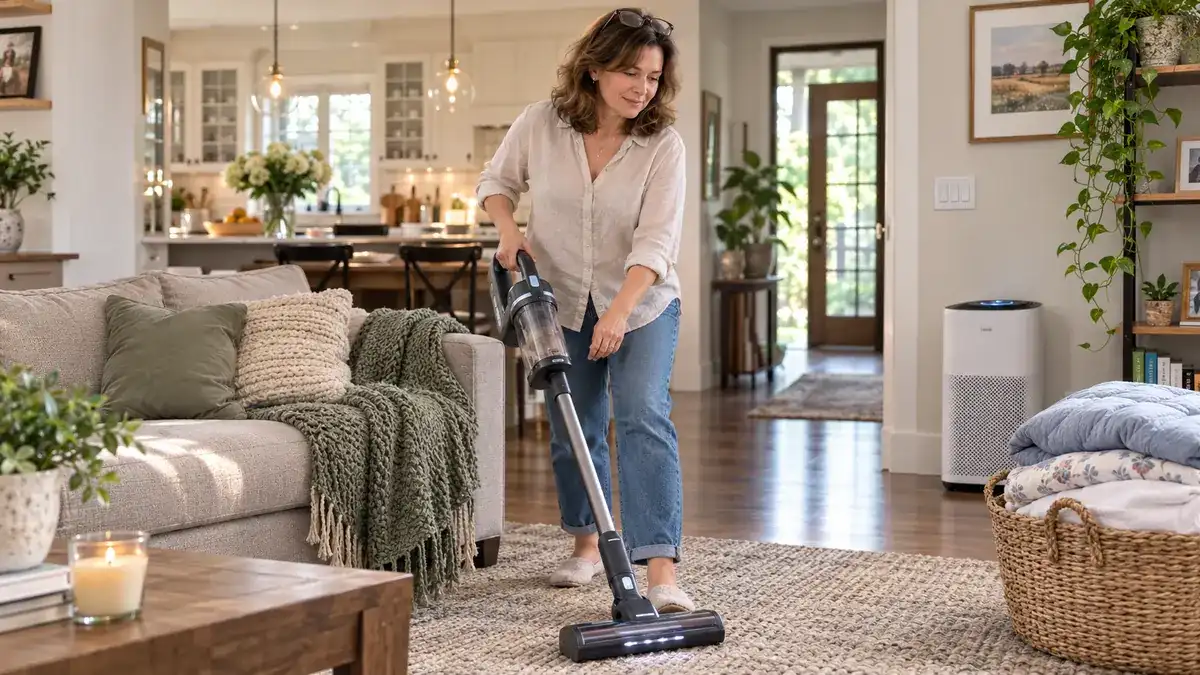
A purifier is one part of the room, not the whole plan. I still run the vacuum with its own HEPA filter over the rugs and along the baseboards twice a week, since a purifier can only catch what's airborne, not what's already settled into carpet fibers until someone walks on it and kicks it back up. Bedding gets washed in hot water weekly during pollen season, since pillows and comforters hold onto more dust and pollen than most people realize. If you want the fuller list of what changes once you add a purifier to a room in the first place, I put together 10 reasons an air purifier changes how a room feels, which covers more of the day to day differences we noticed.
What Else Helps
A few other habits stack on top of the purifier without much extra effort. Damp dusting instead of a dry rag actually picks dust up instead of relocating it into the air, where the purifier then has to catch it all over again. Keeping pets off the specific furniture where allergy-prone people sit helps too, since dander settles directly into upholstery a purifier across the room can't reach.
Humidity plays a bigger role here than people expect too. In a Gulf-side house like ours, running the air conditioning to keep indoor humidity in a reasonable range keeps dust from clumping and settling into fabric as fast, and it gives the purifier drier air to actually move rather than heavy, sticky air that slows everything down. None of this replaces the purifier doing its own job, it's just one more small thing that makes it work better. And if you're still deciding whether the Vital 200S is worth the money for your house, I wrote up the parts of it that annoyed me alongside what held up in my honest Levoit Vital 200S review, since no machine is perfect and it's worth knowing the tradeoffs before you buy one.
A purifier that isn't running isn't filtering anything. Size it right, place it right, and leave it on.
Run It Right and the Dust Actually Stops Piling Up
Size it to the room, give it open floor space, and keep the filter on schedule. The Levoit Vital 200S is the unit doing that job in our living room right now.
Amazon See Current Price on Amazon →