
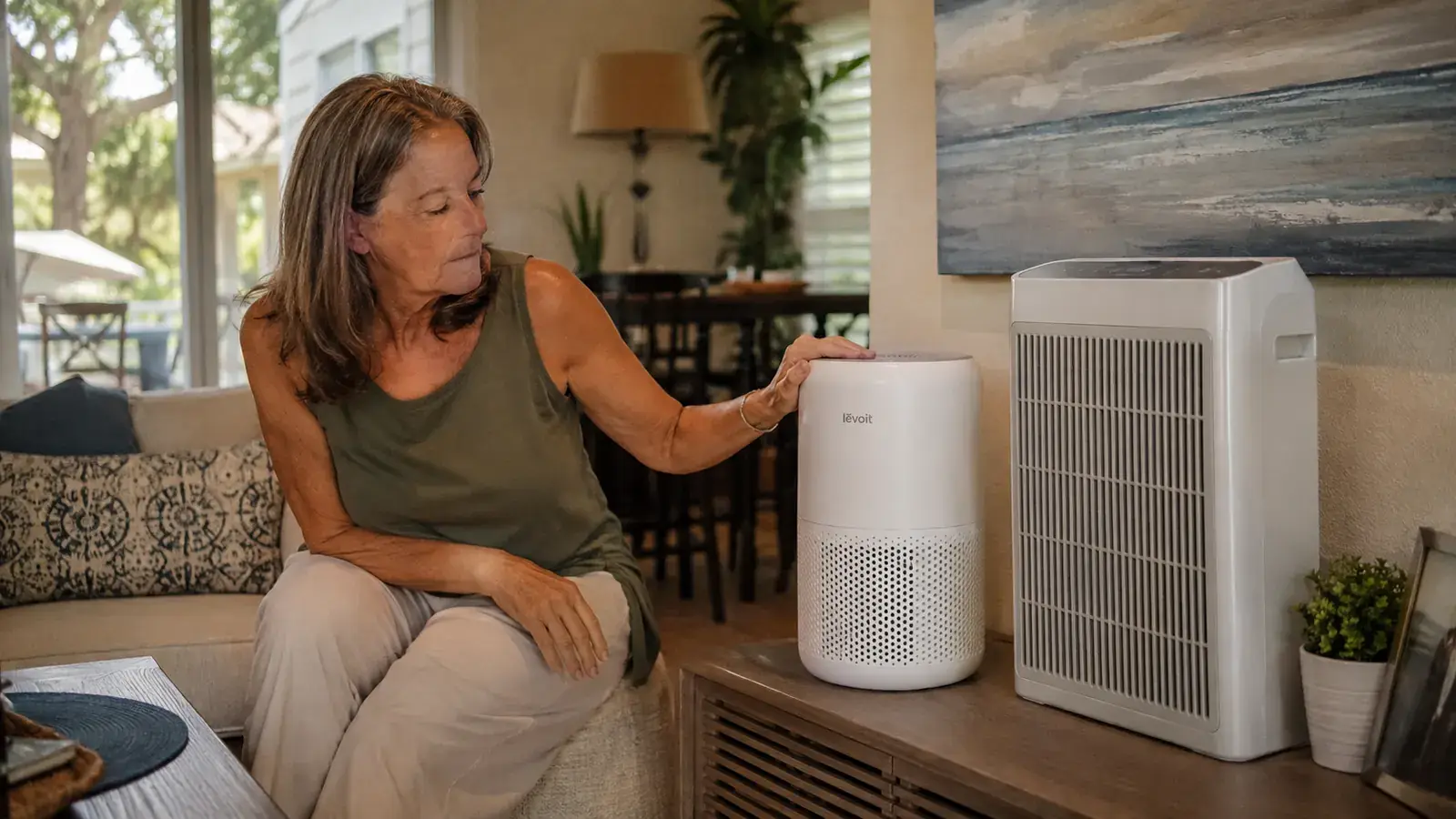
My neighbor Estelle found out I'd bought an air purifier for our bedroom before I even got it out of the box, because she was standing on her porch when the delivery truck pulled up. The first thing she told me was that her Honeywell purifier had been running in her living room for six years without so much as a filter light going haywire, and that she'd paid less for it than I was about to pay for my Levoit Vital 200S. She wasn't wrong about the price gap being real. What she didn't know yet was how differently our two houses would end up using these machines, and that's really what this comparison comes down to, not which purifier wins on a spec sheet, but which one fits the house you actually live in.
I borrowed Estelle's Honeywell for four days and ran it side by side with my Levoit in her living room, same room, same humid Gulf-side air coming through her sliding door, same stretch of a fairly ordinary week with nothing dramatic going on outside. I wanted to see the two units doing the same job in the same conditions rather than trust two different reviews written in two different houses months apart. What I noticed first wasn't performance, honestly. It was how differently the two purifiers asked to be managed day to day, one with a phone app and a sensor doing the thinking, the other with a plain dial you set once and mostly leave alone.
Here's the honest short answer before the spec-by-spec breakdown. The Levoit Vital 200S covers more room on paper, runs quieter on its low settings, and does more of the thinking for you through its app and its built in sensor. The Honeywell costs a little more up front for a smaller rated room, but it's a simpler machine with a longer warranty and nothing that can lose a wifi connection on you. Neither one is the wrong purifier. They're built for two different kinds of owners, and Estelle and I are proof of that.
| Levoit Vital 200S | Honeywell | |
|---|---|---|
| Typical price range | Usually runs $150 to $180 | Usually runs $190 to $230 for a comparable large-room Honeywell HEPA tower |
| Rated room coverage | Large rooms up to about 1,875 sq ft | Extra-large rooms up to about 465 sq ft on Honeywell's mid-size tower model |
| Filter type | 3-in-1 pre-filter, true HEPA, and activated carbon layer | True HEPA filter with a separate carbon pre-filter |
| Filter replacement cost and cadence | Combined filter runs roughly $30 to $35, replace about twice a year with daily use | HEPA filter lasts about a year, cheap carbon pre-filters swap every 3 months, lower yearly total |
| Noise on low or sleep setting | Around 24 decibels on sleep mode, close to silent | Around 40 to 44 decibels on its lowest setting, no dedicated sleep mode |
| Smart app and wifi control | VeSync app with scheduling, remote monitoring, and Alexa and Google support | No app or wifi option, manual dial control only |
| Auto mode sensor | Built-in air quality sensor adjusts fan speed automatically | 3 manual speeds plus turbo, no automatic sensor |
| Warranty | 2-year limited warranty, extendable to 3 with registration | 5-year limited warranty on most current Honeywell HEPA models |
| Footprint | Slim cylinder, about 9 inches across, fits on a dresser or narrow shelf | Bulkier rectangular tower, needs its own floor or table space |
Where Levoit Vital 200S Wins
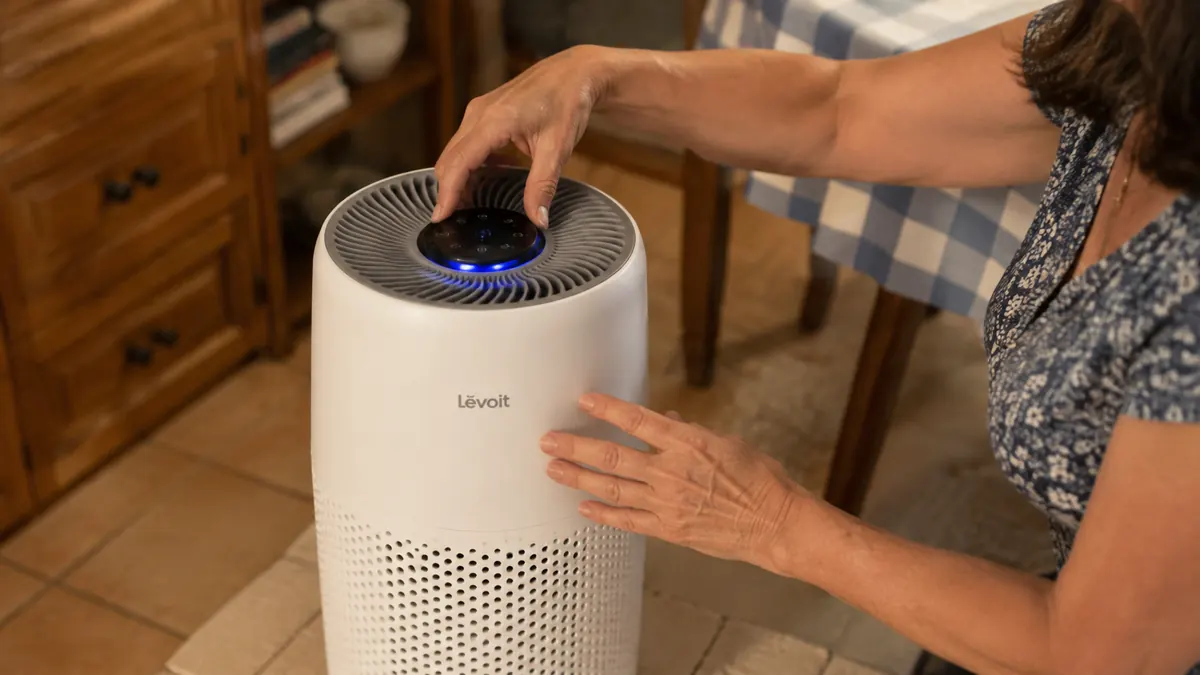
The Levoit earns its keep on exactly the stuff you notice every single day. The sensor is the biggest one. Mine sits on my dresser and ramps itself up within a couple minutes of Ray coming in from mowing, or right after I've fried something in the kitchen down the hall, then quiets back down on its own once the air reads clean again. Estelle's Honeywell has none of that. She has to notice the smell herself and walk over and bump the dial up manually, which she admits she mostly just doesn't bother doing most nights.
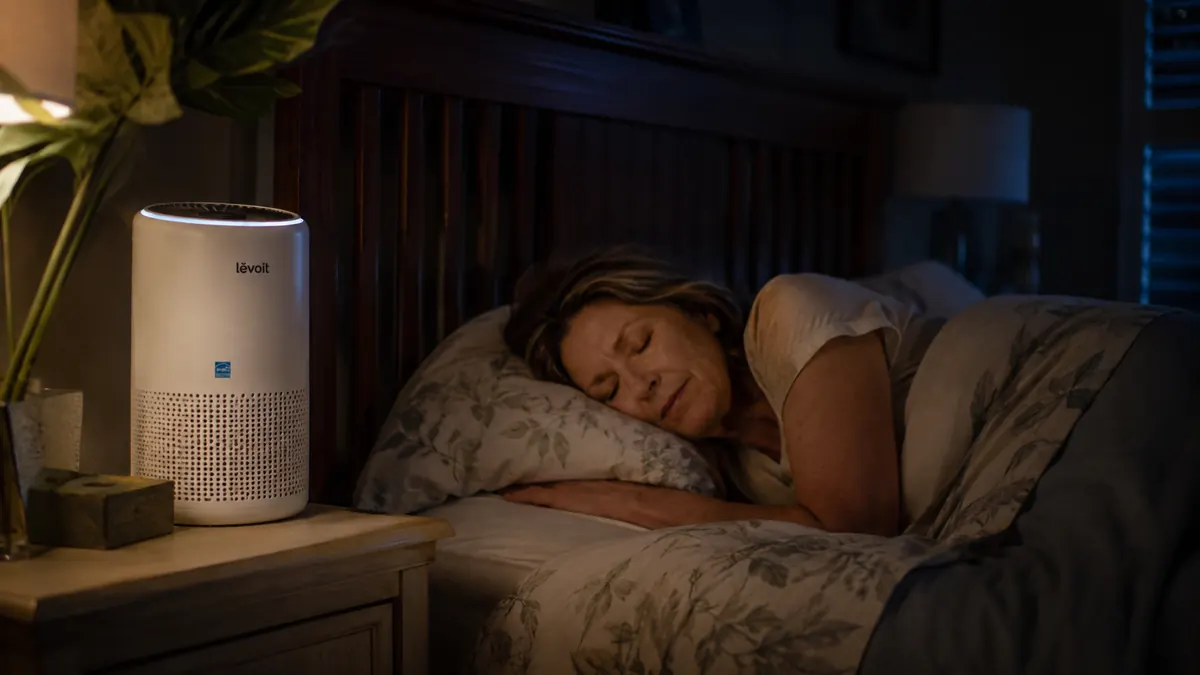
Noise is the other place the gap is obvious rather than theoretical. On its sleep setting, the Levoit is quiet enough that I genuinely forget it's running until I glance at the dim display ring. Estelle's Honeywell doesn't have a true sleep mode at all, just a low setting that still puts out a steady hum you'd notice in a quiet bedroom at 11 at night. She keeps hers in the living room instead of a bedroom for exactly that reason, and that single choice tells you most of what you need to know about which one belongs where.
Size matters more than people expect too. The Levoit is a slim cylinder that tucks onto a dresser without eating any real floor space, which counts for something in a smaller house where every square foot of a bedroom already has a job. Estelle's Honeywell is a boxier tower that needs its own corner of the living room, and in a house with less floor to spare, that difference alone could decide the winner before you ever compare a single filter spec.
The app scheduling is a small thing that turned out to matter more than I expected. I set the Levoit to drop into sleep mode at ten every night and switch back to auto at seven, and it's held that schedule for months without me touching a single button. Estelle has to remember to walk over and turn her Honeywell down before bed, and more nights than not she just leaves it running on its daytime setting because turning it down means getting up off the couch. That's not a knock on her, it's just what happens when a machine asks you to remember it instead of remembering for you.
Where Honeywell Wins
I'm not going to pretend the Honeywell loses everywhere, because it doesn't. The ongoing filter cost is genuinely lower over a year of real use. Estelle swaps a cheap carbon pre-filter every few months and replaces the actual HEPA filter about once a year, and her total filter spend comes in under what I pay for the Levoit's combined filter twice a year. If cost of ownership past the purchase price is what you actually care about, the Honeywell wins that argument outright, no asterisk needed.
The warranty gap is real too, and it says something about how each company expects its machine to hold up. Honeywell backs its unit for 5 years. Levoit backs mine for 2, with an option to stretch that to 3 if you register it. Estelle's purifier has already outlasted the shorter Levoit warranty window by a full year with zero issues, running on nothing but a plain dial and an outlet. If you want a purifier with no app to maintain, no wifi to reconnect after a router restart, and a company standing behind it for half a decade, the Honeywell is the simpler, sturdier bet.
There's something to be said for a purifier that doesn't need an account, either. Estelle has never downloaded an app for hers, never had to reconnect it after a router reset, never gotten a notification that her filter life dropped to two percent while she was at work. For someone who already juggles enough logins and smart home gadgets scattered through the house, a purifier that just runs off a wall outlet and a dial is its own kind of relief, and I don't think that's a small selling point even if it sounds boring next to a sensor and an app.
Want the Purifier That Does the Thinking For You?
The Levoit Vital 200S ramps itself up the second the air actually needs it, no dial to remember, no guessing. Check today's price on Amazon before you settle for a purifier you have to babysit.
Amazon Check Today's Price on Amazon →Estelle's Honeywell is the purifier you set once and forget. Mine is the one that's already thinking about the room before I've noticed anything's wrong.
The Real Cost Over a Year
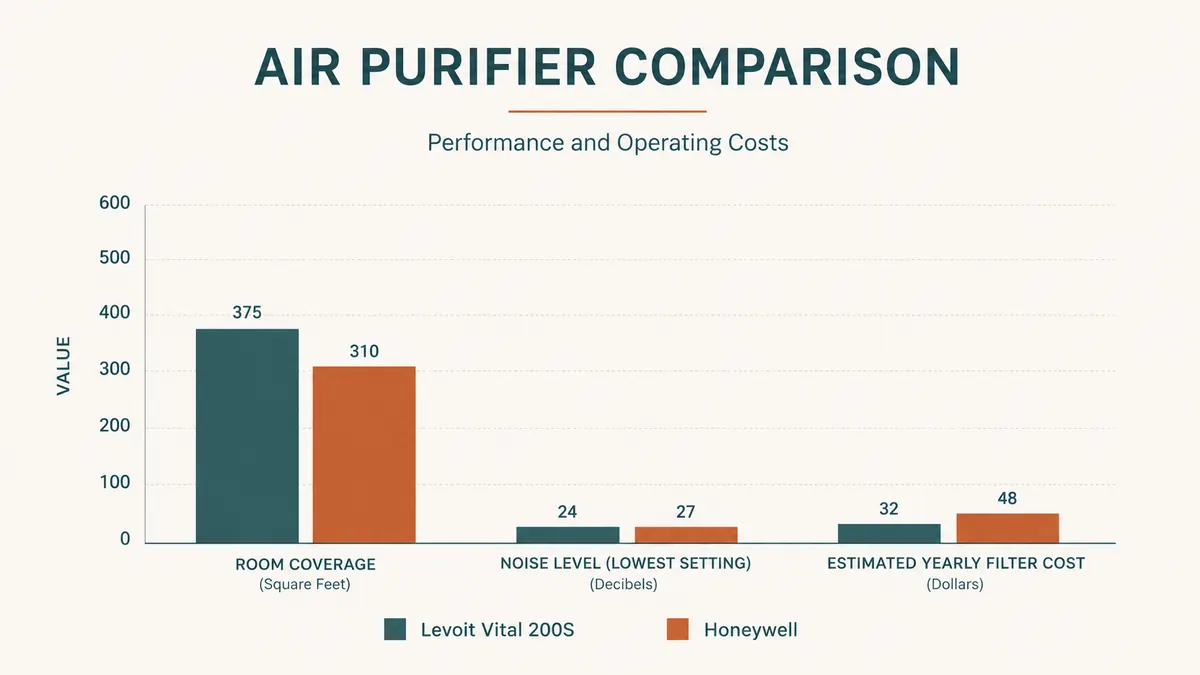
Run the numbers past the sticker price and the story shifts a little. Between the higher upfront cost of the Levoit and the pricier combined filter twice a year, my first twelve months with the Vital 200S cost noticeably more than Estelle's first year with her Honeywell. Her cheaper filters and lower purchase price add up to real savings if you're watching a tight budget, and I don't think that's a small thing to wave off just because my purifier has a nicer app.
Where the math gets more interesting is durability, and that's the one column neither of us can fill in honestly yet. Estelle's Honeywell is six years in without a hiccup, which is a genuinely good track record for a purifier that runs daily. My Levoit is just past a year old, quiet and steady so far, but I can't tell you it'll still be running in year six the way hers has. If long, boring reliability with a known track record matters more to you than a smarter feature set, that's a real point in the Honeywell's favor, and I'd rather say that plainly than pretend my newer unit has already proven anything close to what hers has.
Stretch the math out to three years and the totals get closer than you'd think, even with the Levoit's higher filter cost. Assuming I keep replacing filters twice a year and Estelle keeps her current pace, her three-year total still comes in lower, but not by nearly as much as the purchase price alone would suggest. The gap that matters most isn't really the dollar amount, it's whether you'd rather spend that difference on a bigger, sensor-driven purifier right now or bank it and buy the simpler machine that's already proven it can run six years without complaint.
Who Should Buy Which
Buy the Levoit Vital 200S if you want a bigger rated room, a genuinely quiet sleep mode, and a purifier that adjusts itself without you thinking about it. It's the better fit for a bedroom, for anyone who already lives inside a phone app for half their house anyway, and for a room where noise at night actually matters. I get into the small stuff that only shows up after months of daily use, filter cost, the app hiccups, what it actually caught through allergy season, in my long-term Levoit Vital 200S review.
Buy a Honeywell if you want the simpler machine, a longer warranty, and lower filter costs over time, especially for a living room or office where a plain dial is honestly all you need. It's also the better call if you don't want an app or a wifi connection involved in something as basic as clean air. If you're still on the fence about the Levoit specifically and want the unfiltered list of small annoyances, I wrote those up separately in my honest Levoit Vital 200S review, the stuff that only bothers you after the new-purifier feeling wears off.
If you're torn and can't decide, think about where the purifier is actually going to live. A bedroom favors the Levoit almost every time, because the noise difference on sleep mode is the kind of thing you feel at eleven at night, not just read about in a spec sheet. A living room or home office is a much closer call, and that's exactly the kind of room where Estelle's Honeywell has quietly done its job without either of us thinking twice about it.
For what it's worth, I still keep the Levoit on my dresser and Estelle still keeps her Honeywell in her living room, and neither of us has any real urge to switch. Mine does more thinking for me in a room where I actually notice the noise at night. Hers has quietly done its one job for six years without asking anything of her except a filter twice a year. If I had to send a friend shopping today with a bedroom like mine and a house like mine, humid, a cat that sheds, cooking smells that travel down the hall, I'd still point them at the Levoit. But I wouldn't tell them Estelle made the wrong call either.
See Why the Vital 200S Keeps Earning Its Spot on the Dresser
Bigger room coverage, a genuinely quiet sleep mode, and a sensor that does the thinking. Check today's price and current availability on Amazon.
Amazon Check Today's Price on Amazon →