
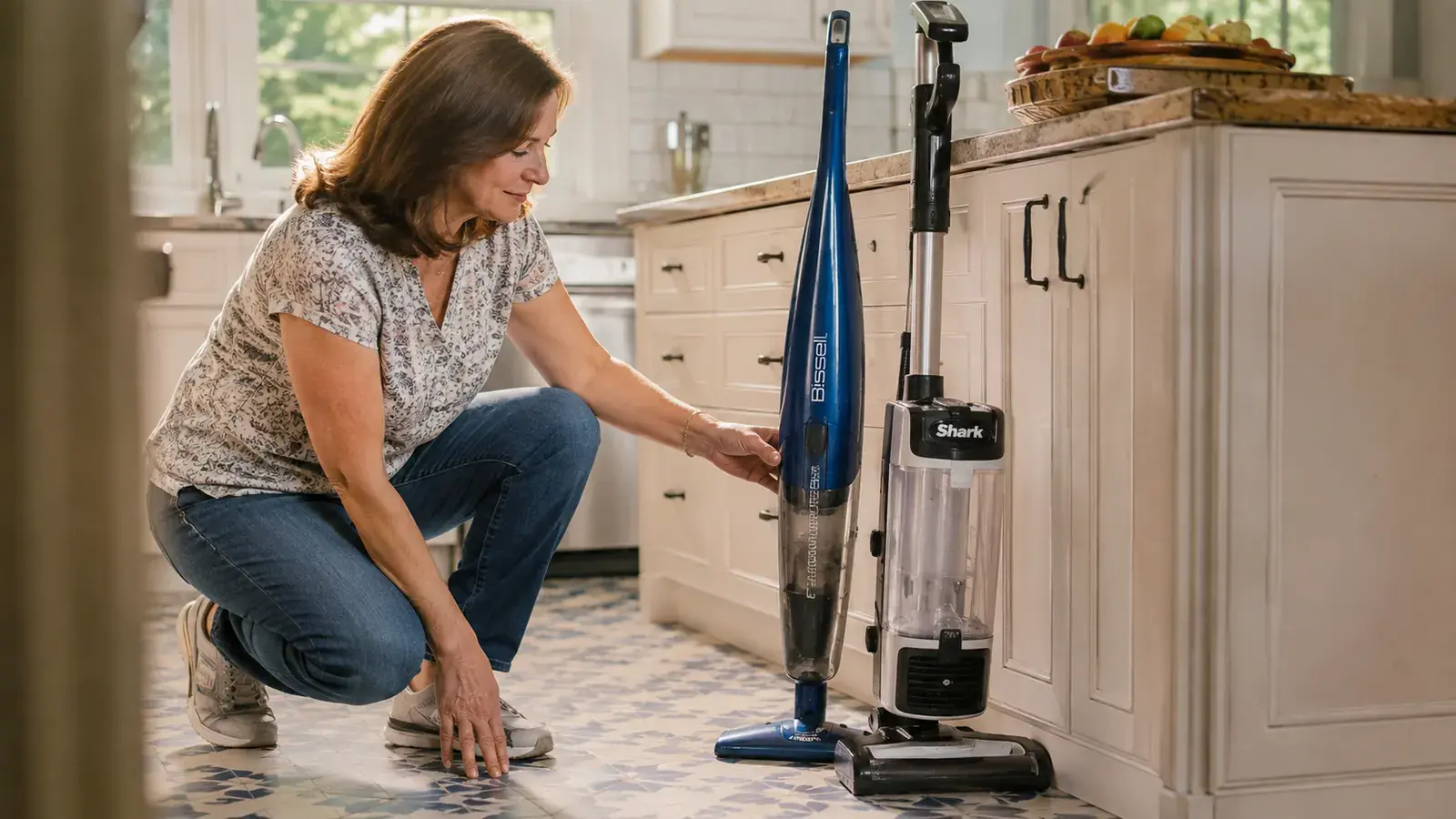
My Bissell Featherweight comes out of the closet by the back door about four times a week, and it has for going on three years now. It's what I grab when my grandson Beau tracks grass clippings across the kitchen tile before dinner, when sand from the porch mats gets everywhere the day after a storm rolls through, when I just need two minutes of clean floor before someone shows up unannounced. It cost me less than forty dollars and it still runs the exact same way it did the week I bought it.
Here's the part nobody selling either vacuum wants said out loud, though. The Shark cordless is genuinely a better machine on paper. More suction, no cord to work around, a run time long enough to do the whole downstairs without stopping to plug back in. It also costs three to five times what the Bissell does, sometimes more depending on which Shark model you land on. So the real question in this comparison isn't which vacuum wins on a spec sheet, because that one's not close. It's which one earns the closet space in your actual house, with your actual floors and your actual patience for charging a battery.
I've owned a corded Bissell for years and borrowed my sister's Shark cordless for a solid month to run this comparison fairly, same house, same mess, same week of Florida humidity working against both of us. What follows isn't a spec sheet copied off a box. It's what actually happened when I ran both machines across the same kitchen, the same hallway rug, and the same back porch two days after a summer storm dumped sand and pine needles across the whole entryway.
The sand and pine needle test was the most telling one. I ran the Bissell first down the entry hall, then followed immediately behind with the Shark on the same six feet of tile. The Bissell picked up nearly everything visible in one pass, but left a faint layer of fine grit near the baseboards, the kind you feel underfoot before you ever see it. The Shark's stronger motor and closer-set brush roll caught that last layer too. On tile the gap wasn't huge, maybe five percent more picked up, but it wasn't nothing either.
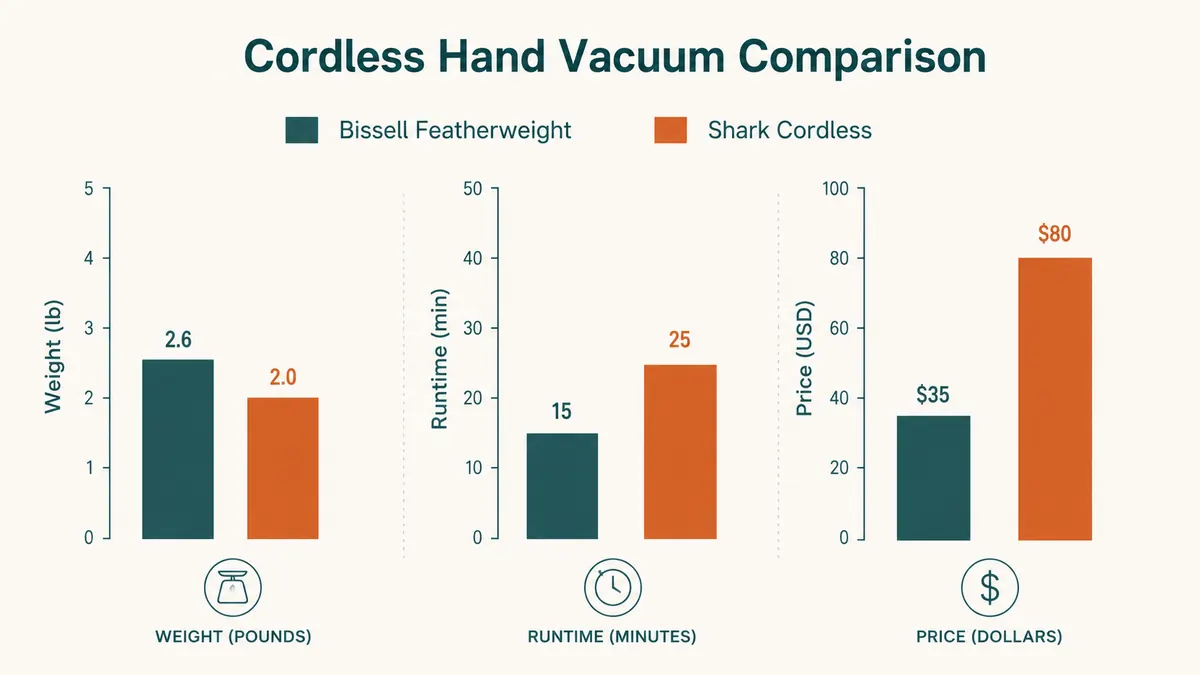
| Bissell Featherweight | Shark Cordless | |
|---|---|---|
| Price tier | About $35, budget corded stick vacuum | Roughly $150 to $280 depending on the model |
| Power source | Corded, plugs into the wall, never runs out of charge | Battery powered, cordless freedom but finite runtime |
| Weight | About 4 lbs, lifts with one hand | About 7 to 9 lbs with the battery pack installed |
| Deep-clean suction on carpet and rugs | Adequate on low-pile, struggles on thicker rugs | Noticeably stronger, pulls embedded dirt and pet hair |
| Dust cup capacity | Small, needs emptying almost every session | Larger, several rooms between empties |
| Filtration | Basic washable filter, no sealed system | Sealed HEPA-rated filtration on most current models |
| Attachments and accessories | Crevice tool only, no motorized brush swap | Multiple attachments, motorized pet and multi-surface heads |
| Warranty | 1-year limited warranty | 5-year limited warranty on most current models |
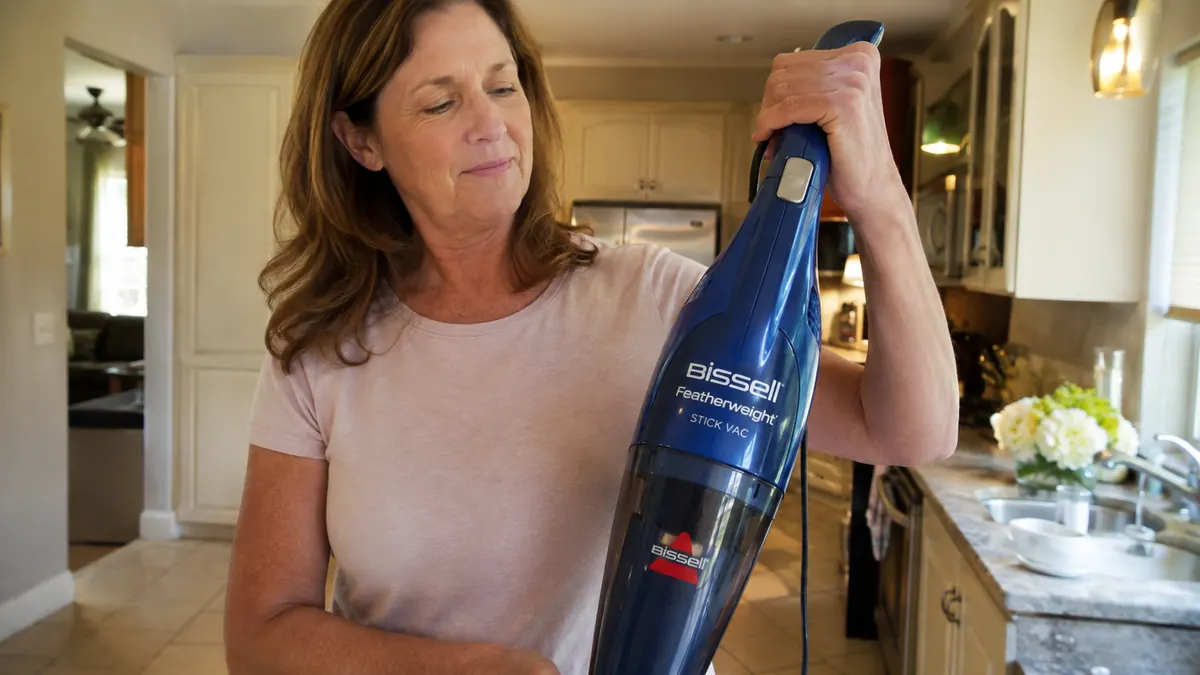
Where Bissell Featherweight Wins
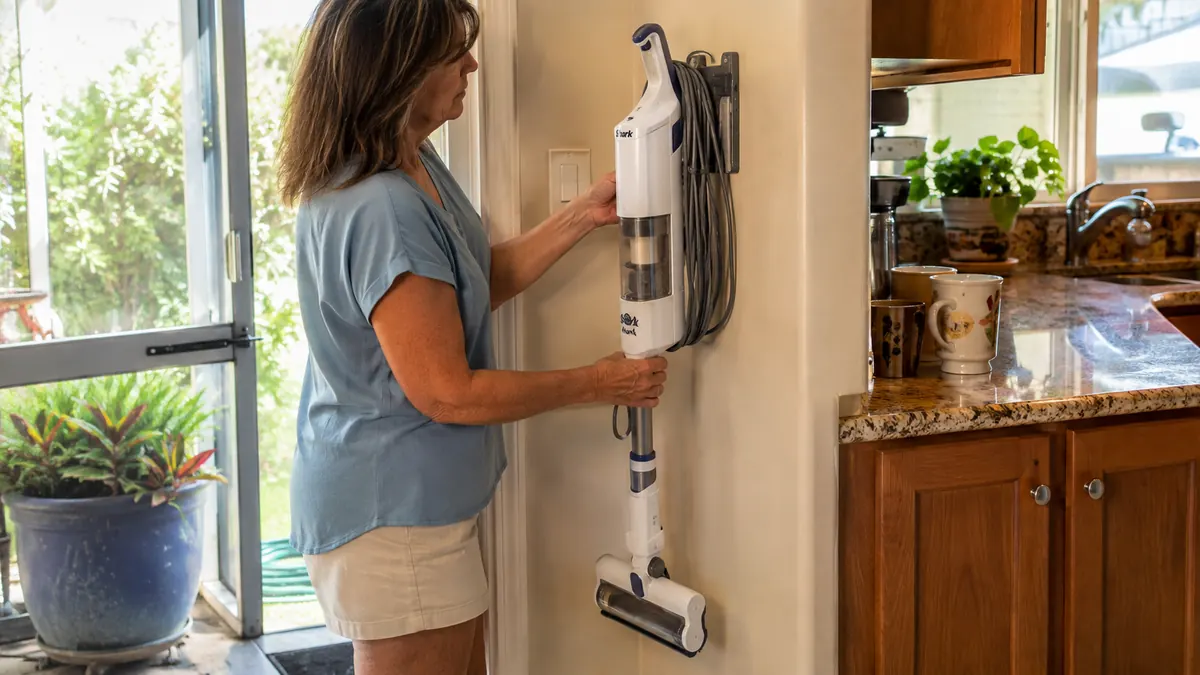
The Bissell wins on the stuff that actually determines whether a vacuum gets used or ends up shoved in the back of a closet. It weighs about four pounds. My arthritis flares in humid weather, and there are days a heavier vacuum simply does not come out, no matter how much dust is on the floor. The Bissell has never once been the reason I skipped cleaning up after dinner. I keep it hanging on a hook by the back door with the cord wrapped around the built-in posts, and it's genuinely faster to grab, plug in, and run across the kitchen than it would be to find a Shark's charging dock and hope the battery isn't sitting at nine percent.
The corded design is a real advantage too, not just a cheaper compromise. In our humid Gulf-side stretch of Florida, I run the AC most of the year and the dust and dander accumulate fast between the vents. A cordless vacuum with a twenty-five or forty-minute runtime is fine for a quick pass, but it will quit on you mid-house if you try to do the whole downstairs in one sweep during allergy season. The Bissell doesn't care. It runs as long as the outlet does. For grab-and-go, five-minutes-before-company cleanups, that's the whole game, and Bissell built this thing specifically for that job, not for a deep weekly clean.
There's also the plain fact that a forty-dollar vacuum is easy to be honest about. If the Bissell dies in two years, I'm not out much, and I've already gotten more use out of it than most appliances I've paid triple for. I don't baby it, I don't worry about the battery degrading the way lithium packs eventually do, and I don't think twice about handing it to my grandson to run over his own room. Cheap and simple has a kind of freedom to it that a $250 machine just doesn't offer, no matter how well it cleans.
Storage is the other quiet advantage nobody puts on a spec sheet. The Bissell folds down small enough to lean against the wall behind a door or fit in a narrow coat closet, no charging base required, no dedicated corner of the house set aside for it. In a smaller home, or the kind of Florida bungalow with limited closet space to begin with, that matters more than people expect when they're comparing two vacuums purely on paper.
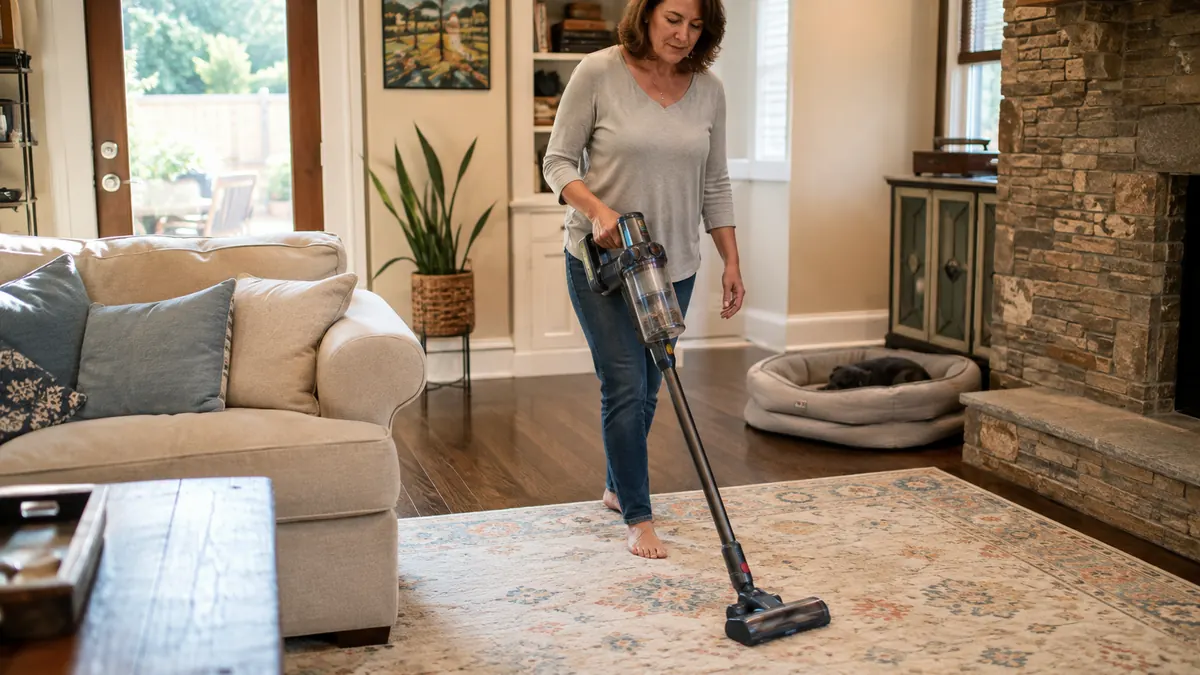
Where Shark Cordless Wins
I won't pretend the comparison is close on raw cleaning power, because it isn't. The Shark pulls noticeably more dirt out of carpet and area rugs, especially embedded pet hair and the kind of ground-in grit that a lighter motor just skates over. If you've got shag rugs, a shedding dog, or thick carpet in the bedrooms, the Bissell will leave a faint haze behind that the Shark simply won't. That's not a knock on Bissell, it's a different machine built for a different job, but it's the honest answer if deep carpet cleaning is your priority.
The dust cup and filtration matter more than people expect too. Shark's sealed HEPA-rated filtration actually holds allergens in rather than recirculating fine dust back into the room, which matters if anyone in the house has asthma or bad seasonal allergies, both of which are common complaints down here. The larger dust cup also means you're not stopping to empty it every single room, which sounds minor until you're mid-clean with company arriving in twenty minutes. On pure capability, the Shark is the better vacuum, full stop. The question the price tag forces you to answer is whether you need that capability often enough to justify it.
The Shark also comes with a real accessory kit, a motorized pet brush head, a crevice tool, sometimes a mini power head for stairs and upholstery. That versatility is genuinely useful if you're trying to replace an upright entirely and want one machine to handle everything from car mats to the couch. The Bissell doesn't try to compete here. It ships with a single crevice tool and calls it a day, because it was never built to be your only vacuum, just your fastest one.
See What Three Years of Daily Use Actually Looks Like
I've put the Bissell Featherweight through grass, sand, spilled flour, and everything a busy kitchen throws at a floor. Check today's price and read the current buyer feedback before you decide.
Amazon Check Today's Price on Amazon →The Shark is the better vacuum. The Bissell is the one that actually leaves the closet.
The Real Cost Over Three Years
Run the math out a few years and the price gap actually widens instead of narrowing. My Bissell has needed exactly one replacement part, a five dollar filter I could have just rinsed and reused but didn't bother with. That's the entire maintenance cost across three years of near daily use. A Shark cordless, if the battery needs replacing once in that same stretch, plus the occasional filter, plus normal brush roll wear from regular carpet cleaning, can add sixty to a hundred dollars on top of what you already paid up front.
None of that makes the Shark a bad investment if you genuinely need what it does. Spread over three years of real cleaning power on real carpet, even a $250 machine works out to under eight dollars a month. But if your floors don't actually demand that level of suction, you're paying that eight dollars a month for capability that isn't doing much of anything for you, month after month, sitting quietly on its charging dock.
Who Should Buy Which
Buy the Bissell if your floors are mostly hard surfaces, tile, laminate, or wood, and your cleaning problem is daily light mess rather than a once-a-week deep carpet job. It's the right call for renters, for anyone on a tight budget, for a second vacuum kept upstairs or in a garage, and honestly for anyone who has decided that a vacuum they'll actually grab every day beats a vacuum sitting in the closet because charging it feels like a chore. I get into what's held up and what hasn't after three years of near daily use in my long-term Bissell Featherweight review, including the one part that finally needed replacing.
Buy the Shark if you have carpet throughout, pets that shed, allergy sufferers in the house, or you genuinely want one vacuum to do everything without keeping a second corded backup around. It costs more, sometimes a lot more, but if deep cleaning performance and cordless convenience matter to your actual routine, that price difference buys real capability, not just marketing. If you're still on the fence about the Bissell specifically, I wrote up the small annoyances nobody mentions in my honest Bissell Featherweight review, the stuff you'd only notice after using it past the first month.
For what it's worth, I still own both. The Shark lives in the hall closet for the Saturday deep clean. The Bissell hangs by the back door for everything in between. If I had to keep only one, though, and my floors are mostly tile and laminate the way most Florida homes are built, I'd keep the Bissell. It's not the better vacuum. It's the one that's still doing the job three years later without asking anything of me except an outlet, and that counts for more than a spec sheet ever will once you've actually lived with the thing.
Ready for a Vacuum You'll Actually Reach For Every Day
No charging dock, no dead battery excuses, just plug in and go. See current pricing and availability for the Bissell Featherweight.
Amazon Check Today's Price on Amazon →