
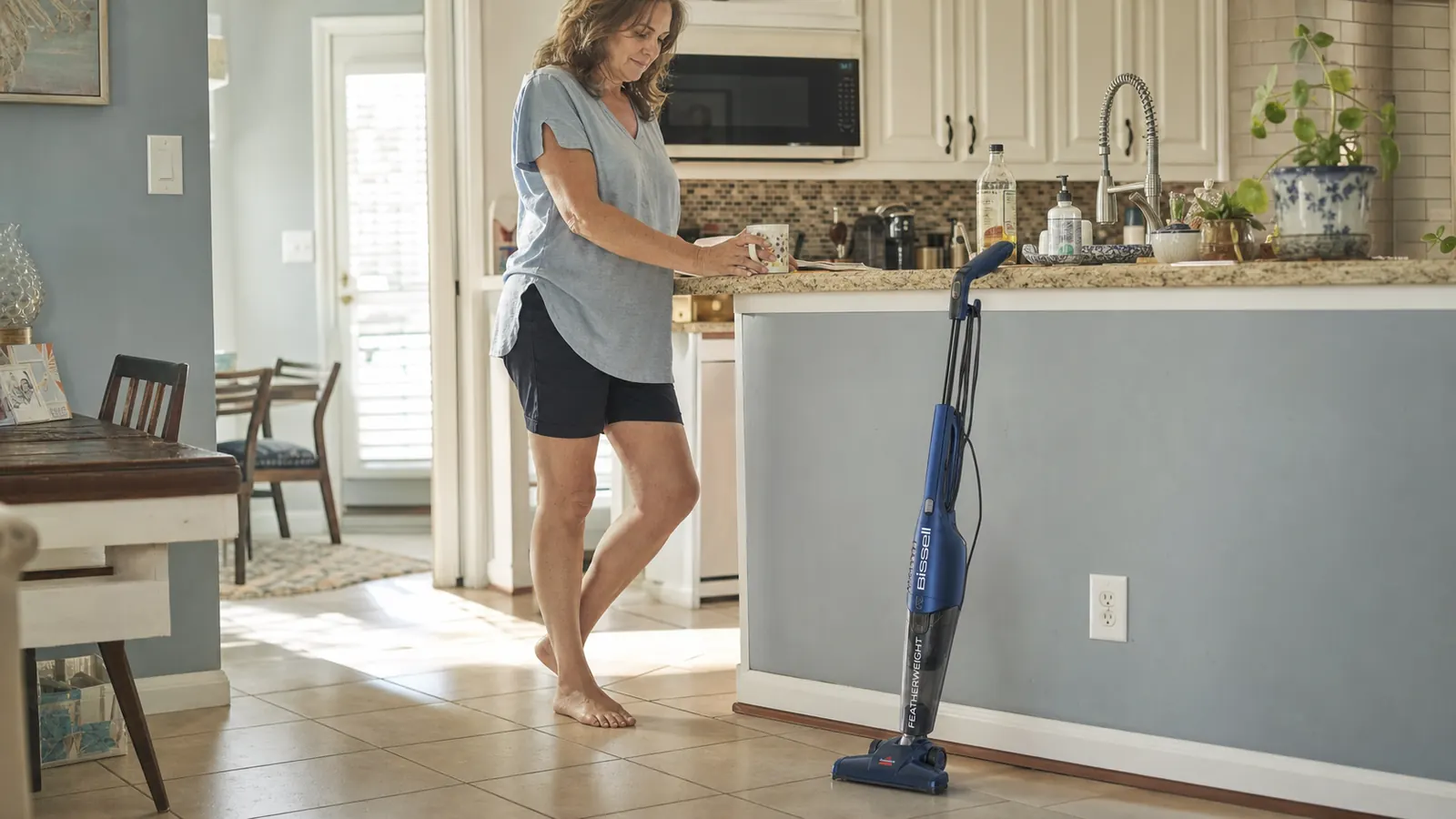
I bought the Bissell Featherweight almost two and a half years ago because I was tired of hauling my full-size upright out of the closet every time my dog Otis knocked his kibble bowl sideways, which, if you have a lab mix, you know is roughly every day. I live in a single-story house here on the Gulf side of Florida, tile and laminate throughout except the bedrooms, and the humidity means dust and pet dander seem to settle on hard floors faster than they ever did in the drier houses I grew up in. I needed something I could grab in one hand, run over the kitchen and hallway in ninety seconds, and put back without a production. The Bissell Featherweight was thirty-five dollars at the time. It's still around that price today. I did not expect it to last two years of daily use. It has, mostly, and I want to be straight with you about the parts that didn't.
Let's get the framing right up front, because a lot of reviews bury this until the fine print. This is not a Dyson replacement, and it isn't trying to be. It is not going to deep-clean an area rug or pull pet hair out of carpet pile the way a cordless machine costing ten times as much will. The Bissell Featherweight is a corded, two-pound, bagless electric broom built for hard floors, and it does that one job well for not much money. If you're shopping for a whole-house cordless vacuum with a runtime long enough to clean three bedrooms of carpet on a single charge, look elsewhere entirely, because this product isn't built for that job and pretending otherwise would waste your money. If instead you want a cheap, light, always-plugged-in tool that lives by the pantry door and handles the daily mess on tile and laminate, keep reading, because that's exactly the gap it fills in my house.
The Quick Verdict
A genuinely useful $35 corded stick vacuum for hard floors and quick cleanups. Not a carpet cleaner, not cordless, and the cord length will annoy you in a big house, but it has earned its spot in my pantry for over two years.
Amazon Check Today's Price →Still my go-to for the 90-second kitchen cleanup
See today's price and current availability for the Bissell Featherweight on Amazon before you commit to a pricier cordless model you might not need.
Amazon Check Today's Price on Amazon →How I've Actually Used It
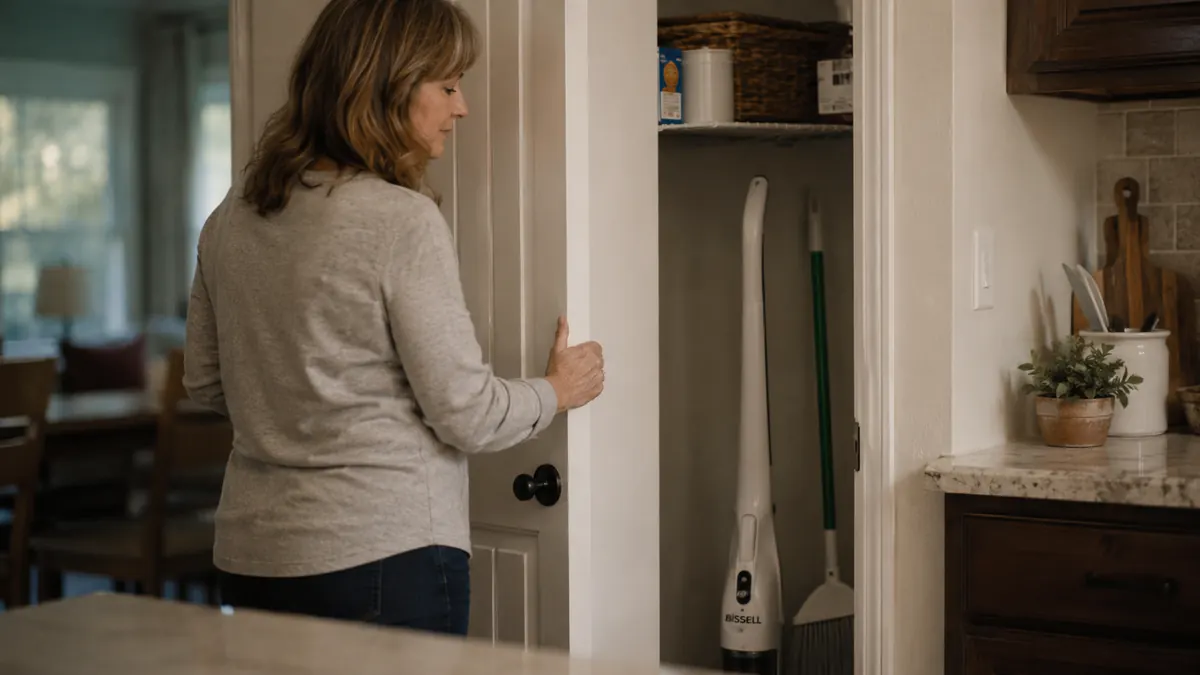
My setup is simple. The Bissell Featherweight lives on a hook just inside the pantry, cord wrapped around the built-in hooks on the handle, ready to go without me having to dig through a closet. Every morning after breakfast, and most evenings after dinner prep, I run it across the kitchen, the little hallway to the laundry room, and sometimes the dining area if we ate at the table instead of the counter. That's maybe four to six minutes of vacuuming a day, split into two short sessions rather than one long one. Over two years that's somewhere north of two thousand power-on cycles, and I think that matters more for a real review than someone who used a unit for a week and wrote about the box it came in before ever really testing it against daily life.
I also keep it around for the stuff a broom doesn't handle well: the fine grit of drywall dust after a small repair, the litter that scatters a foot outside the box no matter what mat I put down, and the confetti of shredded receipt paper my cat Gus apparently considers a hobby. The crevice tool that comes attached to the Bissell Featherweight's handle gets used weekly, mostly for stair edges and the gap between the fridge and the cabinet where crumbs go to hide until they're a week old and crunchy underfoot. It pops off and on in about two seconds, which matters more than it sounds like it should when you're mid-cleanup and just want the job done.
What I don't use it for: the bedrooms, which have low-pile carpet, or the living room rug. I tried it on both early on and it moves surface debris but doesn't agitate carpet fibers the way a beater-brush upright does, so it leaves a visibly worse result on carpet than it does on tile. For that I still pull out my old corded upright twice a month for a proper deep clean. The Bissell Featherweight is a hard-floor tool first, and treating it as anything else sets you up to be disappointed with a product that never claimed to be a whole-house solution in the first place.
What Two Years of Daily Use Actually Did to It
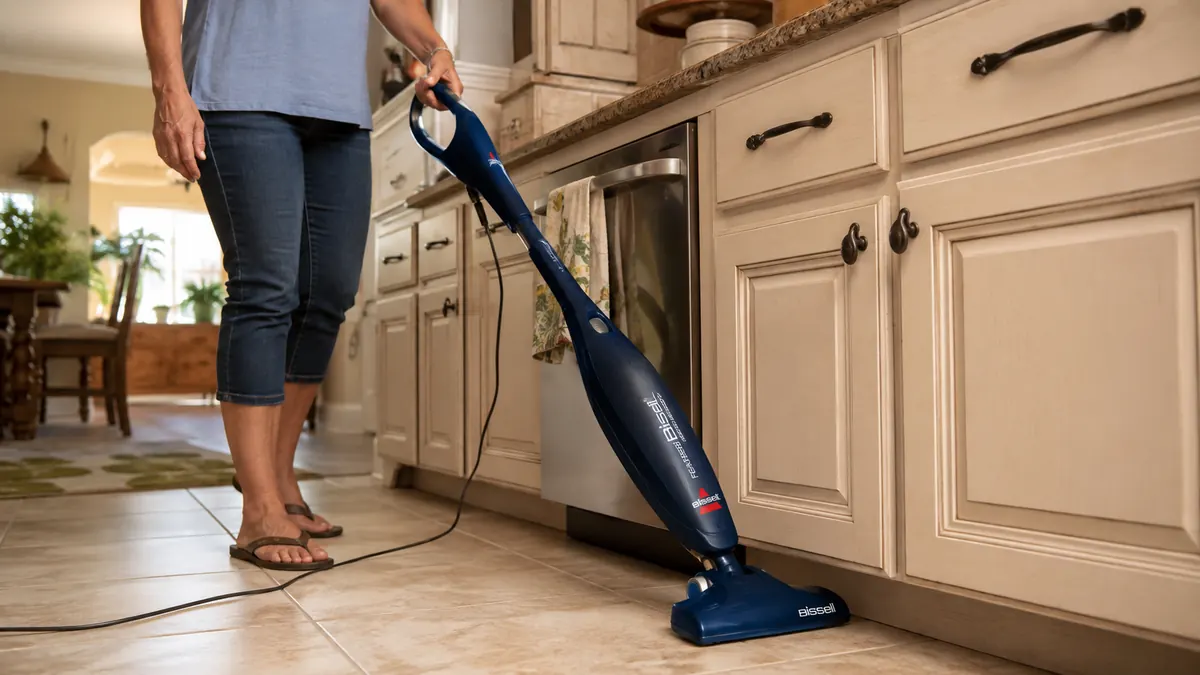
The motor is still running at what feels like the same suction it had on day one, which genuinely surprised me given how many cheap electronics quietly lose power over time without you noticing until they're half of what they used to be. The clear dust cup has developed a light haze from repeated washing under the kitchen faucet, so it's less see-through than it used to be, but I can still eyeball when it needs emptying by holding it up to the window. I empty it every two to three uses, which for us is roughly twice a week given how much foot traffic runs through this kitchen.
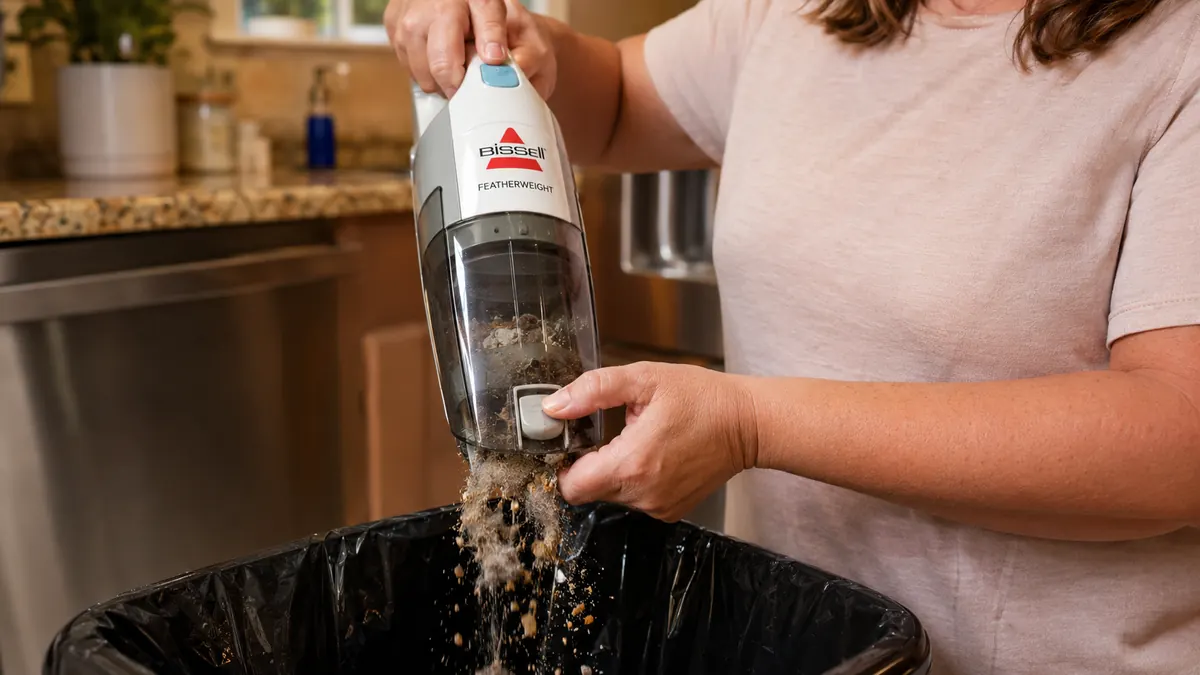
The brush roll is where the Bissell Featherweight shows its age most honestly. Between my hair, my daughter's hair, and Otis shedding year-round in our humidity, the roller collects wrapped hair the way every brush-roll vacuum does, cheap or expensive. There's no auto-detangle feature here, so I sit down with kitchen scissors and pick it clean about once a month, usually while watching something on my phone so it doesn't feel like a chore on its own. It takes about five minutes start to finish. If that sounds tedious, it kind of is, but it's a known tradeoff at this price point and I'd honestly rather spend five minutes with scissors once a month than five hundred extra dollars on a self-cleaning brush I might not even need for a hard-floor-only vacuum.
The one real mechanical hiccup came around month fourteen, when the on-off switch got a little sticky, requiring an extra firm press to engage. It never failed outright, and it still turns on every single time, but it went from a light tap to needing real pressure with my thumb. I've read a few other long-term owners mention the exact same thing in their own reviews, so it's worth knowing about going in rather than assuming you got a defective unit if it happens to you a year or so down the road.
The Cord Is the Real Tradeoff, Not the Suction
People fixate on suction power when they're comparing stick vacuums, but after two years my honest complaint about the Bissell Featherweight isn't suction, it's the cord. It's about 20 feet, which sounds like plenty until you're standing in the kitchen and realize the nearest outlet is behind the refrigerator and the cord barely reaches the hallway closet door. In my house I have to switch outlets twice to cover the main living area, unplugging and replugging mid-clean like I'm doing some kind of household chore relay race. If your kitchen, dining room, and hallway aren't all near the same outlet, budget for some cord-wrangling and outlet-hopping of your own. It's not a dealbreaker for me because my sessions are short and I'm already used to the shuffle, but it is the single biggest daily friction point, more than the weight, more than the small dust cup.
The flip side of the cord is that it never runs out of charge mid-task, never needs to sit on a dock overnight before it's usable again, and never dies halfway through cleaning up a spilled bag of rice, which has genuinely happened to me with a battery-powered handheld I used to own that I trusted more than I should have. For a tool I want ready at a moment's notice, every single time, corded works in my favor more often than it works against me, even with the outlet-hopping.
Who a Featherweight-Style Vacuum Is Actually Best For
If you have mostly hard floors, want a light secondary vacuum for daily upkeep, and don't want to spend more than lunch money on it, the Bissell Featherweight earns its keep month after month. It's also a smart second vacuum for anyone who already owns a full-size machine for carpet and just wants something faster for the kitchen, rather than replacing a whole system that already works. I go into more detail on this exact case in why a stick vacuum beats hauling out the upright for daily messes, because that was really my whole buying decision in a nutshell before I ever clicked buy.
What I Liked
- Genuinely light, easy for anyone to grab one-handed without straining
- Suction hasn't noticeably weakened after two years of near-daily use
- Crevice tool built into the handle, always available, never lost in a drawer
- Cheap enough that replacing it in a few years doesn't sting the wallet
- Compact enough to store upright in a narrow pantry or closet corner
Where It Falls Short
- 20-foot cord is short for anything but a small to mid-size home
- Brush roll needs manual hair removal monthly, no auto-detangle feature
- Not built for carpet or rugs, this is a hard floors tool only
- Power switch got noticeably stiffer to press after about a year of daily use
- Dust cup is small and needs emptying every couple of uses
It's not trying to be a cordless flagship, and once I stopped expecting it to act like one, I actually appreciated it more.
What I Considered Instead
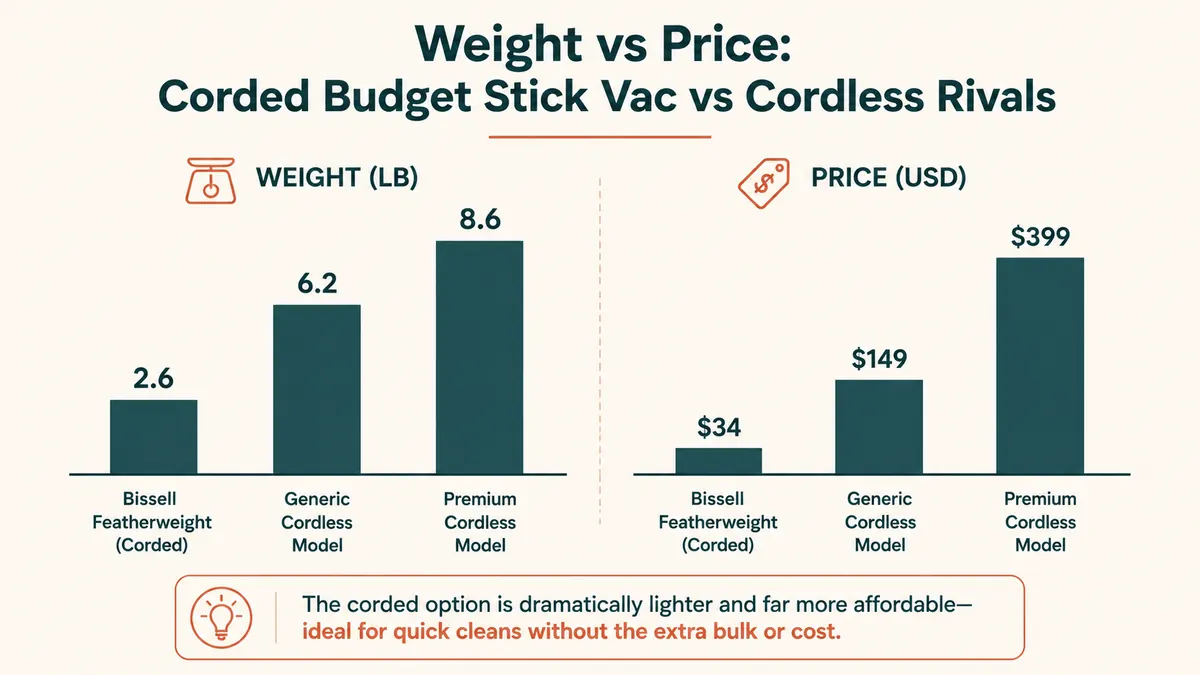
Before settling on the Bissell Featherweight, I looked hard at a cordless Shark model and a Dirt Devil handheld, both of which were sitting on the same store shelf when I finally made the trip to replace my old broom-and-dustpan routine. The Dirt Devil was cheaper but felt flimsy in the store, plastic that flexed noticeably when I gripped it, and the online reviews I read afterward mentioned motor burnout within a year for a fair number of owners. The cordless Shark was tempting because no cord means no outlet-hunting, but it ran nearly four times the price and the battery life on the model I compared it against topped out around 20 minutes before needing a recharge, which is fine for a single quick job but not something I wanted to rely on for two cleaning sessions a day without babying the battery and planning my cleaning around its charge cycle.
I wrote up the full side-by-side in Bissell Featherweight vs Shark cordless if you're weighing that exact decision yourself, because the honest answer depends heavily on your floor mix, your patience for charging routines, and how much you're willing to pay for the convenience of no cord at all. For my kitchen-and-hallway routine, the math wasn't close. For someone with a bigger house and more open floor plan, it might genuinely tip the other way.
Who This Is For
This is for the person with mostly tile, laminate, or hardwood who wants a cheap, light, no-fuss tool for daily crumbs, pet hair drift, and quick spills that don't warrant hauling out a full-size machine. It's for anyone who already has a real vacuum for carpet and just wants a faster grab-and-go for the kitchen, without spending real money on a second premium unit. It's for renters who don't want to invest heavily in a rental they might leave in two years and would rather not pack a bulky upright when they move. And honestly, it's for anyone who's been burned before by an expensive cordless vacuum with a battery that quietly degraded after eighteen months of use, because the Bissell Featherweight simply doesn't have that failure mode. There's no battery to degrade in the first place.
Who Should Skip It
If your home is mostly carpeted, this isn't your primary vacuum, full stop, and no amount of running it back and forth over a rug will change that. If you have a sprawling floor plan with outlets far apart, the cord will frustrate you daily and you're better off paying more for a cordless option that fits your layout instead of fighting the Bissell Featherweight's limitations every time you clean. And if you truly hate the idea of picking hair off a brush roll by hand once a month, look at models with self-cleaning brush rolls, though you'll pay several times the price for that convenience alone. For my kitchen and hallway routine here in Florida, the tradeoffs were worth it two and a half years running. For a bigger house with more carpet and a spread-out layout, they might not be worth it for you, and that's a completely fair place to land.
Two years in, it still lives by my pantry door
If your mess is mostly crumbs, pet hair, and hard floors, check today's price on the Bissell Featherweight before you spend four times as much on a cordless model you may not need.
Amazon Check Today's Price on Amazon →