

Before I bought my Instant Pot Duo, I read maybe fifteen reviews online, and almost every one of them was either a five-star love letter or a one-star rant from someone who clearly skipped the manual. What nobody wrote down was the mundane stuff, the small friction you only notice after a pressure cooker has lived on your counter for a couple of years. So this is that review. Not whether the Instant Pot Duo is good, it is, and I already covered that ground in my long-term Instant Pot Duo review. This piece is about what actually annoyed me, what I wish someone had told me before I cleared eleven inches of counter space for it, and what I would tell my neighbor Ruthanne if she leaned over the fence and asked me straight.
My honest starting point is this: I did not return it, and I still reach for the Instant Pot Duo more nights than not. But there is a real gap between what the box promises and what a Tuesday night with it actually looks like, and closing that gap for you is the whole point of what follows.
The Quick Verdict
A genuinely useful appliance once you learn its real timing, its counter footprint, and the handful of habits that keep it from throwing errors.
Amazon Check Today's Price →Curious what the display timer doesn't tell you?
The Instant Pot Duo is a real time-saver once you know its quirks going in. Check today's price on Amazon before you decide.
Amazon Check Today's Price on Amazon →How I Really Put Mine to Work
I did not write this piece from memory. Over the past few weeks I went back through the Instant Pot Duo deliberately, timing it with my phone, logging when I hit the burn notice, measuring the footprint with a tape measure, and paying attention to the things I usually tune out because they have become routine. That is a different exercise than reviewing a product fresh out of the box, and it surfaces different problems, the kind that only show up once the novelty has worn off and you are just trying to get dinner on the table.
What follows is not a complaint list. It is the specific, practical stuff I would want to know if I were standing in a friend's kitchen deciding whether to clear counter space for one of my own. Some of it is minor. Some of it changed how I actually use the Instant Pot Duo day to day.
I kept a small notepad on the counter for the log, which felt a little silly the first night and completely normal by the third. Every time I sealed the lid, I wrote down the clock time, the setting, and the pressure release method, then wrote down the time again when I actually served the food. That plain habit is what turned a bunch of vague impressions about the Instant Pot Duo into real numbers I could put in this review instead of just telling you it felt slower than the box promised.
The Come-to-Pressure Time Nobody Counts
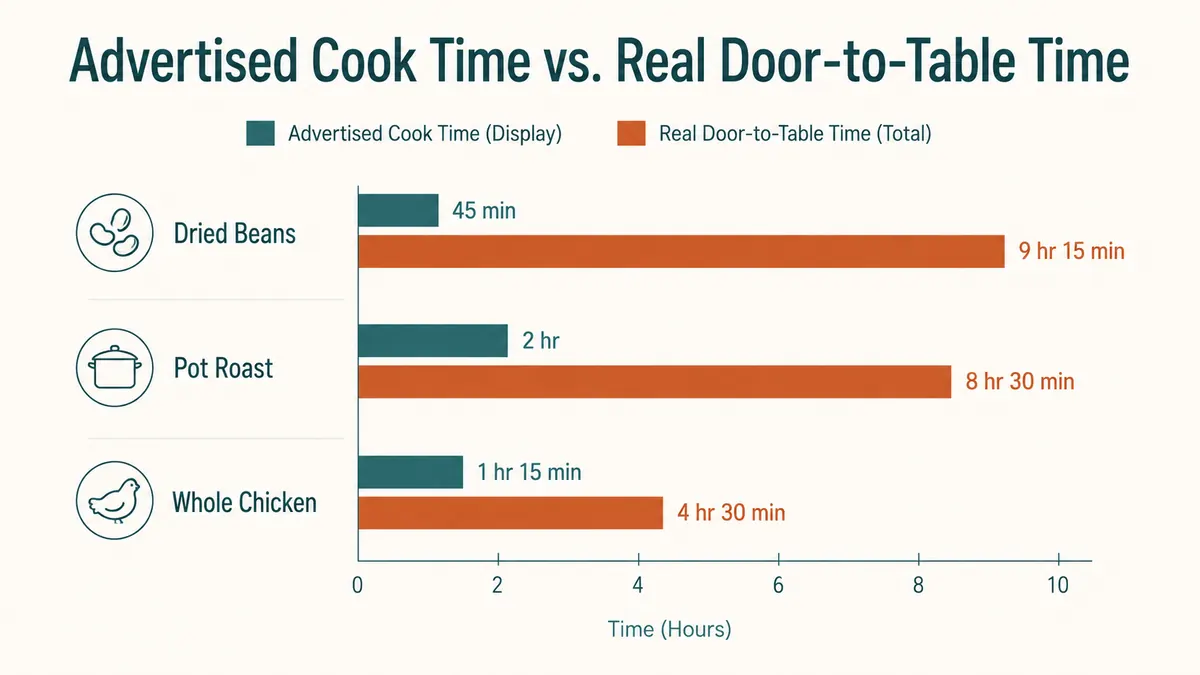
Here is the thing about the timer on the Instant Pot Duo that nobody explains before you buy one: the number you set is not the number of minutes until dinner is ready. It is only the pressurized cooking time. Before that clock even starts, the pot has to build pressure, which for a full pot of dried beans or a whole chicken can run ten to fifteen minutes on its own. After the timer ends, if the recipe calls for a natural release rather than a quick release, you are looking at another ten to twenty minutes before it is safe to open the lid.
I clocked this properly for a batch of dried pinto beans a few weeks back. The display said twenty-five minutes. Door to table, from the moment I sealed the lid to the moment I served dinner, it was closer to forty-eight minutes. That is still faster than the two and a half hours dried beans take on the stovetop, so the Instant Pot Duo is not lying to you exactly, but the number on the screen is a fraction of the real story, and if you are timing dinner around a specific pickup or practice schedule, that gap matters.
A pot roast made the gap even more obvious. The display read sixty minutes, which sounds like a lot until you compare it to the three or four hours a roast needs in the oven. But between browning the meat on saute first, waiting for the pot to come up to pressure with a full load of vegetables and liquid, and then letting it sit for a full natural release so the meat did not seize up, the real total ran closer to an hour and forty minutes. Still a genuine win over the oven, just not the sixty minutes the display number implies on its own.
The fix is simple once you know it: add roughly fifteen to twenty-five minutes of buffer to whatever the display says, depending on how full the pot is and whether the recipe calls for a natural or quick release. I now build that buffer into my own head automatically. Nobody tells a first-time buyer that, and it is the single biggest reason a new owner ends up standing in the kitchen at six thirty wondering why dinner still is not ready.
The Burn Notice, and What Actually Trips It
At some point, if you use the Instant Pot Duo regularly, you will see the word Burn flash on the display and the cooking cycle will stop itself. The first time it happened to me, with a pot of chili, I assumed something was broken. It was not. The Burn notice is a safety sensor on the bottom of the pot detecting that food is sticking or scorching against the base, and it shuts things down before that turns into an actual mess or a damaged inner pot.
What causes it, in my experience, is almost always one of two things: not enough liquid relative to how thick the dish is, or leftover browned bits stuck to the bottom from the saute step that never got scraped up before sealing the lid. That chili incident was the second one. I had browned ground beef and onions, then added a thick can of tomato sauce without deglazing the fond stuck to the bottom first, and the sensor caught it within a few minutes of pressurizing.
The fix that has worked every time since is deglazing with a splash of broth or water right after sauteing, scraping the bottom clean with a wooden spoon before adding thicker ingredients like tomato sauce or barbecue sauce. It sounds small, but it is the one habit that separates a smooth Instant Pot Duo dinner from a stopped cycle, a reset, and twenty extra minutes you did not plan for.
The Counter Footprint and the Lid You Have to Store Somewhere
Nobody puts the actual dimensions front and center when they are selling you on the Instant Pot Duo. Mine measures right around thirteen inches deep with the lid attached, and it needs clearance above it too, since the lid swings up and back when you are loading or checking the pot. I measured my counter before buying my current model, mostly because I had already made the mistake once with a stand mixer that turned out to be all show and no storage plan, and I would tell anyone to do the same before they buy.
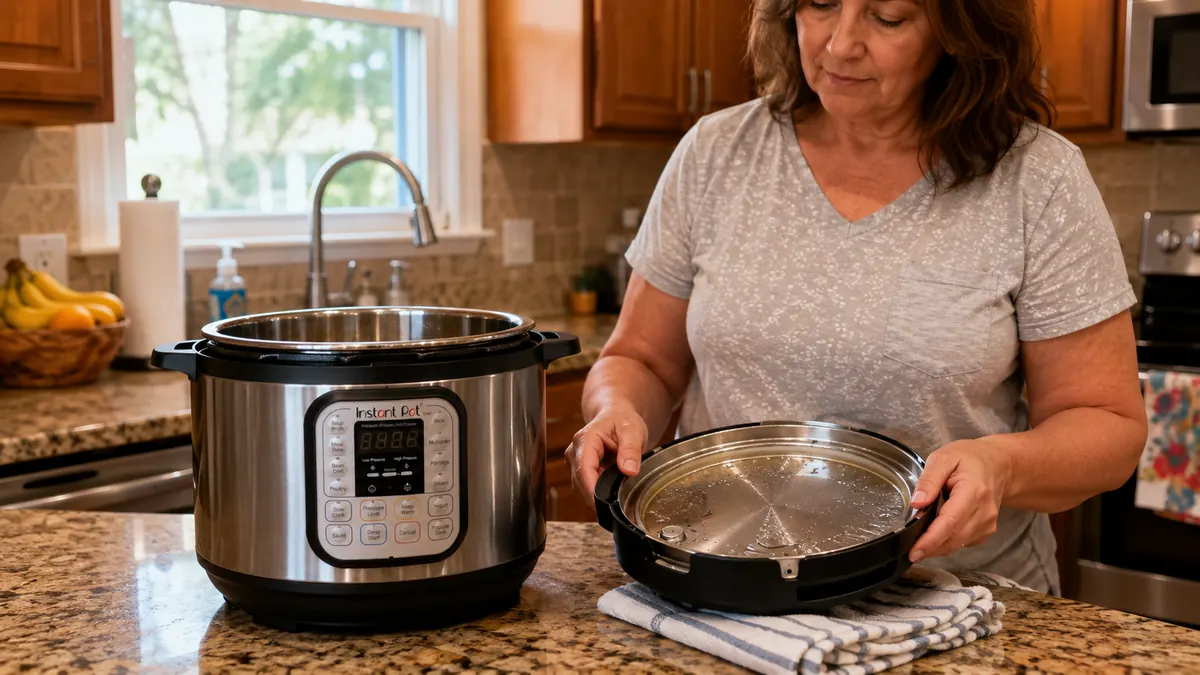
The part that genuinely surprised me, though, was the lid. Once you take it off to check on food or add an ingredient partway through a recipe, there is no built-in spot to set it down. It is heavy, it has a wet steam valve on top, and the underside is always dripping with condensation. For the first few months I set it directly on my counter, which left a ring of moisture I had to wipe up every single time. I eventually started keeping a folded dish towel next to the pot specifically for the lid to rest on, upside down, and that solved the mess completely.
The base itself is also heavier than it looks in a listing photo, closer to eleven pounds once the inner pot is in, and the cord is on the shorter side, which mattered more than I expected once I decided where it would live permanently. If your outlet sits at the far end of the counter from where you actually want to cook, you may end up needing an extension cord or rearranging your layout, something I only figured out after moving mine twice in the first month.
None of this is a dealbreaker. It is just the kind of practical detail that never makes it into a spec sheet, and it is exactly the sort of thing that trips up a first-time buyer who is imagining a sleek, self-contained appliance rather than one that needs a little bit of counter choreography around it.
The Sealing Ring Smell, and the Trick That Actually Works
The silicone sealing ring inside the lid is porous enough that it holds onto strong smells, and this is the complaint I see most often from other Instant Pot Duo owners once you dig past the glowing reviews. Cook a lot of garlic, onion, or curry through it, and the ring will carry a faint version of that smell into the next thing you make, even something as mild as steamed rice or oatmeal.
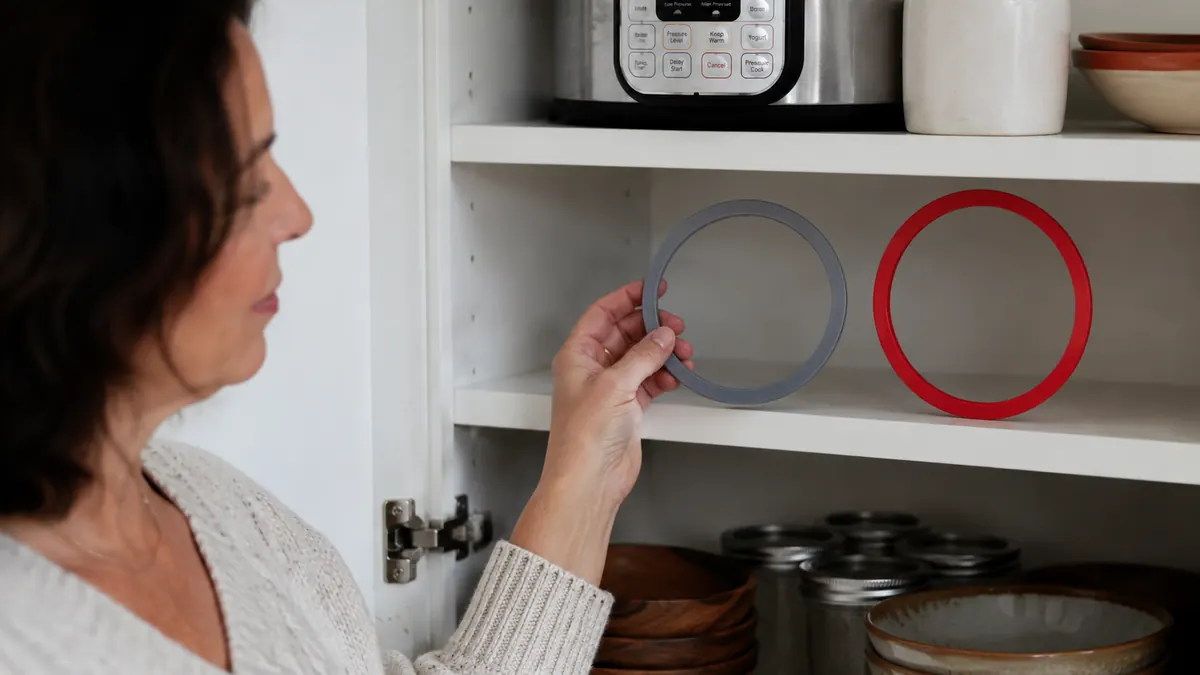
I tried the usual internet advice first, a vinegar and baking soda soak, letting the ring air out in direct sun for a day, running it through a hot dishwasher cycle with the door cracked. All of it helped a little and none of it made the smell disappear completely. What actually solved the problem was buying a second sealing ring, a different color from the original so I can tell them apart at a glance, and keeping one dedicated strictly to savory cooking and the other strictly to anything sweet or neutral, like yogurt, rice pudding, or plain rice. That two-ring system is the only fix that has held up for me over the long haul, and it costs less than most people expect for the amount of aggravation it removes.
If you only plan to make one type of food in the Instant Pot Duo, savory dinners and nothing sweet, you may never notice this at all. But if you are hoping to move between chili one night and rice pudding the next, budget for a second ring from the start rather than discovering the problem the hard way, the way I did.
The Steam Release Nobody Warns You About
The quick release on the Instant Pot Duo is loud. Not dangerous, just genuinely startling the first several times, a sharp hiss that sends a column of steam straight up toward the cabinets above the counter. My son Sam jumped a full step back from it the first time he was in the kitchen when I released the valve, and I have since learned to warn anyone standing nearby before I do it.
It also puts real humidity into the room in a few seconds, enough that I now crack a window or run the range hood fan if I am releasing pressure on a muggy summer evening, otherwise my kitchen ceiling fogs up faster than I would like. None of this is a flaw exactly, it is just physics, pressurized steam has to go somewhere fast, but it is one more small thing that surprises a first-time owner who is expecting a quiet countertop appliance rather than something that briefly sounds like a small engine venting.
What I Liked
- Actually faster than the stovetop once you build the real buffer time into your head
- The burn notice is a genuine safety feature, not a flaw, once you know how to avoid tripping it
- A second sealing ring solves the smell-crossing problem completely and cheaply
- Holds up mechanically over years of regular use without needing repairs
Where It Falls Short
- The display timer is only a fraction of the real door-to-table time
- No built-in spot for the wet lid once you remove it mid-cook
- Needs real counter clearance above and around it, more than the listing photos suggest
- The quick release is loud and humid enough to catch newcomers off guard
None of these are reasons to skip the Instant Pot Duo. They are reasons to walk in with your eyes open instead of expecting the display timer to be the whole story.
Who This Is For
This review is for the person who wants the real friction points before they buy, not after. If you have counter space to spare, a habit of deglazing your pan before you seal a lid, and you do not mind a second sealing ring as a one-time fix, the Instant Pot Duo earns its keep. It is also a solid pick if you already know you want the flexibility of pressure cooking, saute, and steam in one appliance and you are willing to learn its real timing rather than trusting the number on the display. If you are still weighing it against another model, my side-by-side comparison of the Instant Pot Duo and the Crock-Pot Express covers that ground directly.
It is also worth it if you already cook the kind of food that plays to its strengths: dried beans, tougher cuts of meat, stock, whole grains. Those are the dishes where the real time savings, buffer and all, still beat anything the stovetop or oven can offer on a weeknight.
Who Should Skip It
If your kitchen counter is already maxed out, or you are the type who wants to set a timer and walk away completely without any mental math about buffer time, this may frustrate you more than it helps. And if the idea of a loud steam release near small kids or pets makes you uneasy, it is worth knowing that going in rather than being caught off guard the first time you use it.
I would also skip it, or at least wait, if you tend to walk away from the stove mid-task. The saute step before pressure cooking still needs real attention, standing there stirring onions or browning meat, and if that is not a habit you already have, the burn notice will become a familiar and slightly annoying part of your week.
Know the quirks, still want the speed?
Once you build in the real timing and a second sealing ring, the Instant Pot Duo genuinely earns the counter space. Check today's price on Amazon and see if it fits your kitchen.
Amazon Check Today's Price on Amazon →