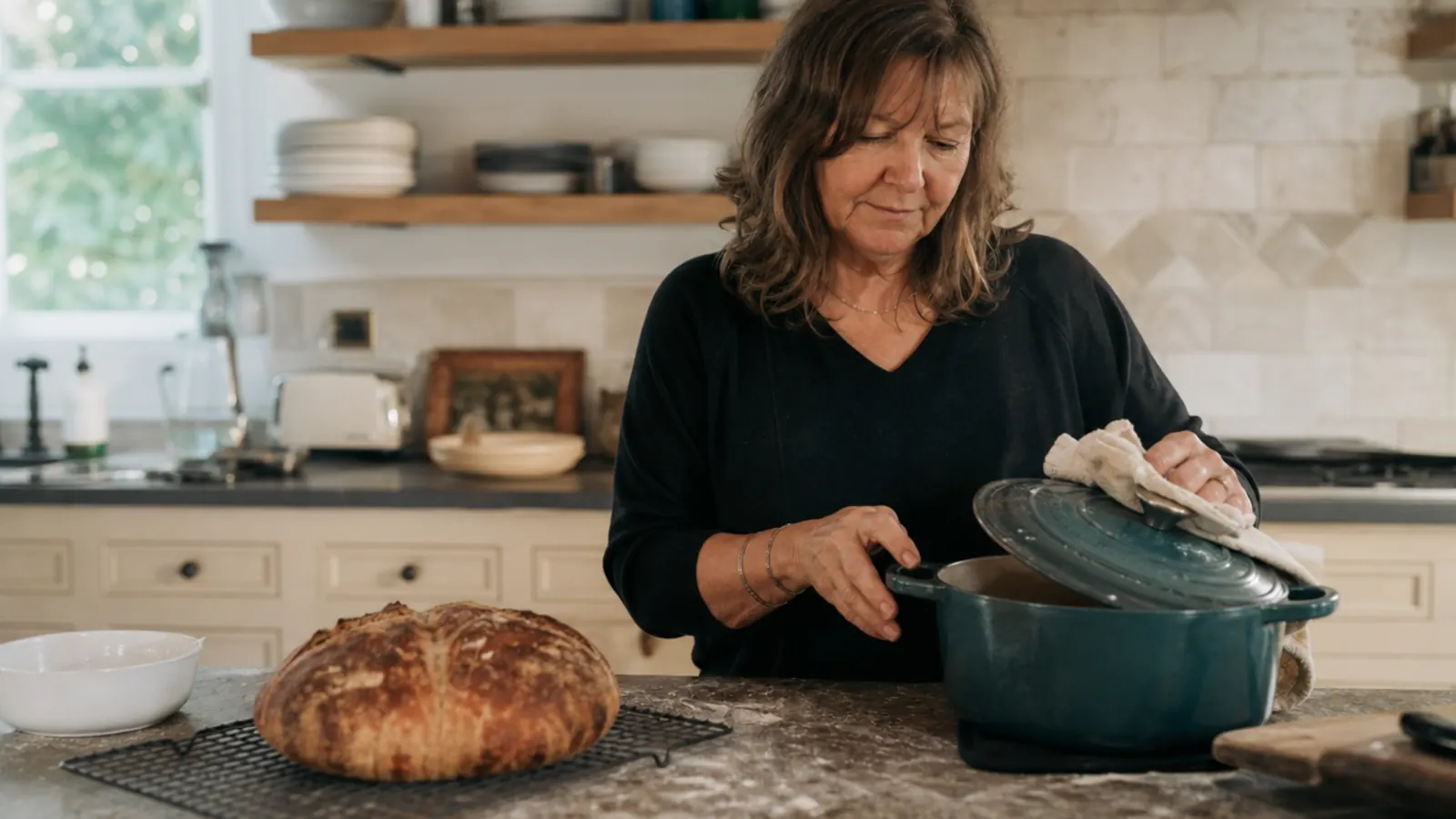
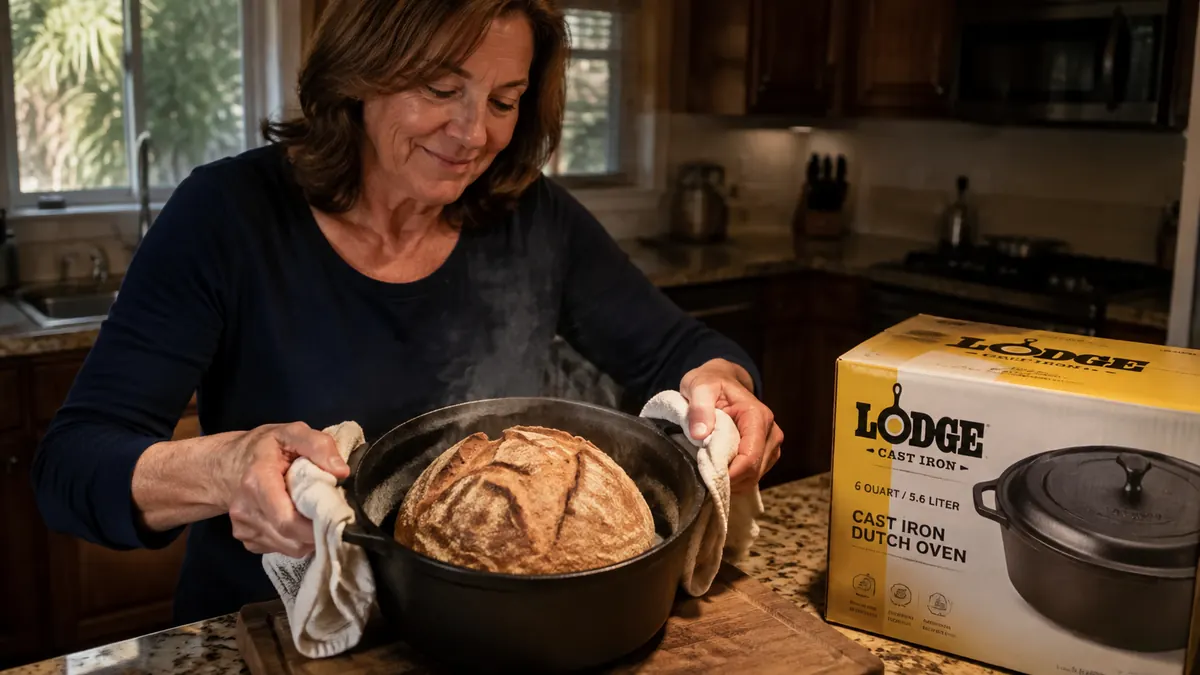
For years my bread came out of the oven looking like a pale, flat disappointment, decent flavor, no crackle, no rise worth bragging about. Then I started baking inside my Lodge enamel Dutch oven instead of on a sheet pan, and the very first loaf had the kind of crust that shatters when you cut into it. I've since gone through more flour than I care to admit testing this against every other method I own, and the Dutch oven keeps winning. Here are ten real reasons a covered pot beats a baking sheet, in plain terms, starting with the one that matters most.
None of this is theory. This is what happened, loaf after loaf, in my own kitchen with my own Lodge pot, the same 6 quart one that lives on my stove more often than it lives in the cabinet. If your bread has ever come out pale or flat, one of these ten reasons is probably why.
The Pot That Fixed My Flat Loaves
If your bread keeps coming out pale on top and dense in the middle, this is the exact pot that turned mine around, and it's the one I still reach for every weekend.
Amazon Check Today's Price on Amazon →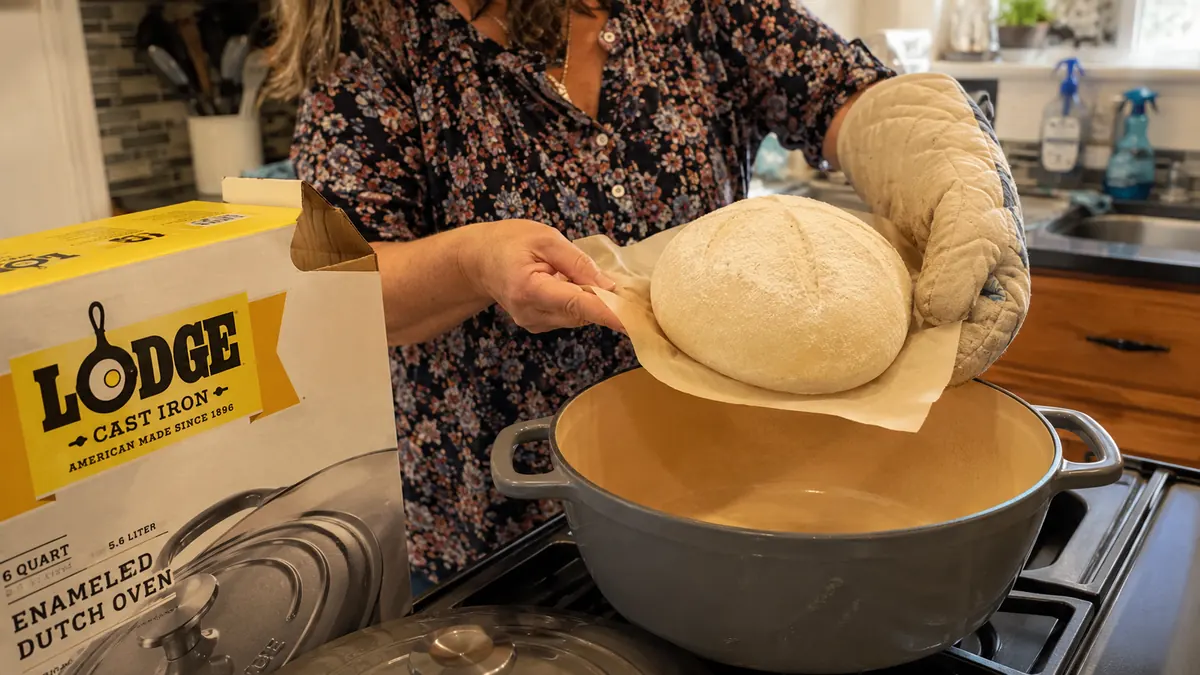
The Lid Traps Steam a Baking Sheet Never Will
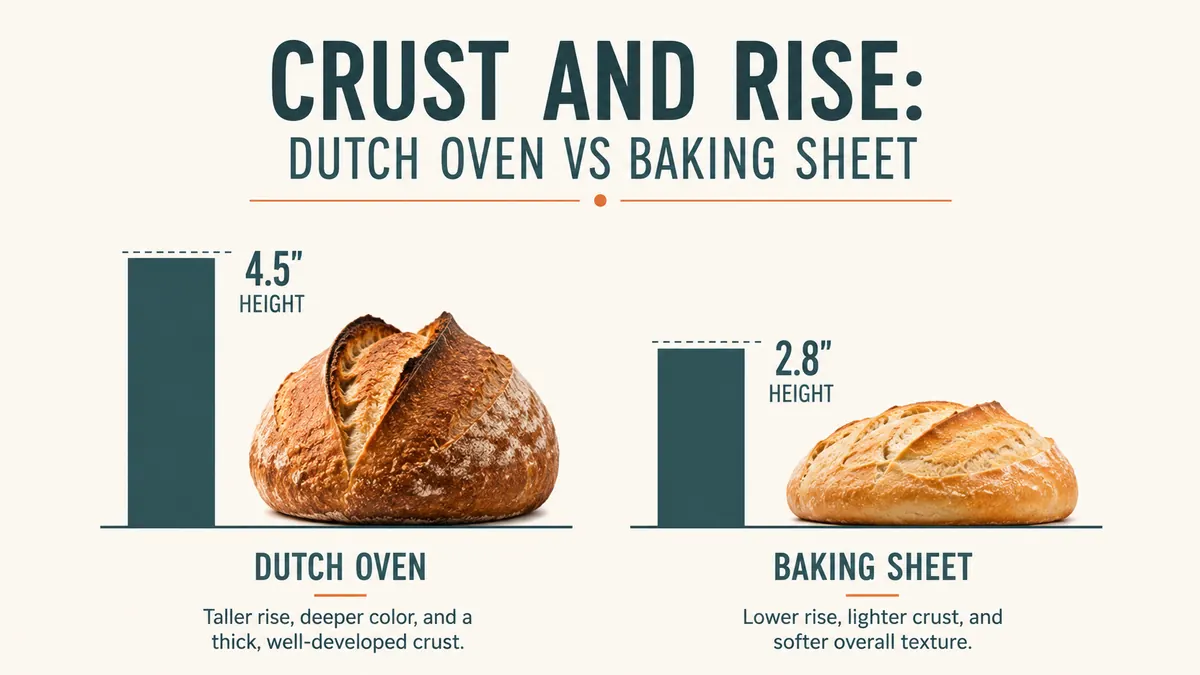
Bakery ovens inject steam for the first several minutes of a bake because a moist environment lets dough expand fully before the crust sets. A home oven can't do that on its own, but a covered Lodge Dutch oven does it automatically. The dough releases its own moisture, the enamel lid holds it in, and the loaf gets that early window to rise before the crust locks it in place. That's the single biggest reason my loaves look different now than they did on a sheet pan.
It Turns My Regular Oven Into Something Closer to a Bread Oven
I don't own a wood-fired oven and I'm not buying one. What I have instead is a heavy cast iron pot that preheats along with my oven and holds onto that heat the whole bake. Once the dough goes in, the enamel walls keep the temperature steady around it instead of letting the oven's normal cycling knock it around. It's the closest thing to a real bread oven I'm ever going to have on a kitchen budget, and I wrote up the exact way I preheat and load it in this step-by-step Dutch oven bread method if you want the full routine.
The Dark, Blistered Crust Happens Without Babysitting
Once the lid comes off partway through, the same enclosed heat that gave the loaf its rise starts working on color instead. I get a deep, blistered, almost mahogany crust without standing at the oven door watching it or rotating the pan every few minutes. It just happens on its own while I'm doing something else in the kitchen, which for a weekend bake is exactly how I want it to go.
Even Heat Means No More Pale Bottoms
A thin baking sheet heats up fast and cools down just as fast, which means the bottom of the loaf can scorch or stay pale depending on where the hot spot in your oven happens to sit. The heavy cast iron in the Lodge holds its temperature evenly all the way around the loaf, top, sides, and bottom. I stopped getting that one dark edge and one pale side that used to show up on my sheet pan loaves the moment I switched.
The Dough Gets Real Oven Spring Before It Sets
Oven spring is that final burst of rise a loaf gets in the first few minutes of baking, and it's the difference between a tall, open crumb and a squat, dense one. Dough needs to stay soft and expandable long enough for that burst to happen, and the trapped steam under the lid buys it that extra time. My loaves gained real height once I started baking them covered instead of exposed on a sheet.
One Pot Replaces a Whole Shelf of Bread Gear
I used to own a baking stone, a steam pan for the oven floor, and a spray bottle I'd mist the dough with every few minutes, hoping I wasn't losing too much heat every time I opened the door. The Lodge Dutch oven does the job of all three at once. It's one pot, already in my regular cookware rotation, doing double duty as my bread setup every Saturday morning.
The Enamel Interior Means Bread Doesn't Stick to the Pot
Bare cast iron can grab onto dough if the seasoning isn't perfect, but the smooth enamel coating on this Lodge pot releases a loaf cleanly as long as I use a bit of parchment or a light dusting of flour underneath. I don't fight the pot to get the bread out, and I don't scratch anything scraping at a stuck crust. It comes out clean, the pot wipes down, and I'm not white-knuckling the release like I used to with a raw cast iron skillet.
The Dual Handles Make a 500-Degree Pot Manageable
Pulling a preheated Dutch oven out of a 450 to 500 degree oven is not a moment to be fumbling with a slippery single handle. This pot has two sturdy handles on opposite sides, so I can lift it level with two oven mitts instead of tipping it toward myself one-handed. That matters more than people think until they've tried it the other way with a single-handled pan.
The 6 Quart Size Fits an Actual Home Loaf
A lot of Dutch ovens on the market are sized for stews and braises first, bread second, and the fit ends up awkward, either too tight for the dough to expand or so oversized the loaf spreads flat instead of rising up. The 6 quart size on this Lodge pot gives a standard home loaf room to climb without so much extra space that it just sprawls sideways. It's the right proportions for the kind of round or oval loaf most home bakers actually make.
It's Held Up Long Enough That I Trust It Every Weekend
This is the same pot I use for braises and soups the rest of the week, and I've put it through a lot more than bread over the past couple of years. I go into the full wear and tear, the enamel, the lid, all of it, in my long-term Lodge Dutch oven review. Nearly 40,000 buyers have rated it, and it holds a 4.7, which lines up with how mine has performed. That's not a coincidence at that many reviews.
What I'd Skip
This Lodge pot is heavy, and I mean genuinely heavy once you factor in a preheated 6 quart cast iron pot full of hot dough. If you have wrist or shoulder trouble, get comfortable using two oven mitts and moving slowly, because you do not want to be one-handing this out of a 500 degree oven. It also takes up real counter and cabinet space, so if your kitchen is already tight, think about where it lives before you buy it. And if all you ever want is bread, a dedicated bread cloche might be lighter to handle day to day. But for a pot that also earns its keep braising short ribs and simmering soup the other six days of the week, the tradeoff has been worth it in my kitchen.
The first loaf I pulled out of that pot had a crust that crackled when I cut into it. I hadn't heard that sound out of my own oven before.
Still Fighting Flat Loaves? Start Here
If your bread has never had real oven spring or a crust that crackles, this is the pot I'd point you toward first, the same one that's been living on my stove for two years now.
Amazon Check Today's Price on Amazon →